

In the modern digital economy, cyber incidents are no longer isolated technical problems. They have evolved into complex risk events that can disrupt operations, damage reputations, and expose weaknesses in organisational resilience.
Recently, cybersecurity researchers observed a significant surge in distributed denial-of-service (DDoS) attacks, with over 149 attacks targeting more than 110 organisations across multiple countries within a short time frame. The attacks were largely attributed to loosely coordinated hacktivist groups that use cyber disruptions as a form of digital protest.
While many of these incidents were temporary disruptions, they highlight an important reality for modern enterprises: cyber risk is becoming increasingly unpredictable, coordinated, and global.
For business leaders, risk managers, and cybersecurity professionals, the lessons from these events extend far beyond a single wave of attacks.
Hacktivism refers to cyberattacks conducted by individuals or groups motivated by ideological, social, or activist causes. Unlike traditional cybercriminals who focus primarily on financial gain, hacktivists typically aim to draw attention to an issue, disrupt targeted organisations, or send a symbolic message.
In many cases, the primary objective is visibility rather than destruction. By disrupting websites, public portals, or digital services, hacktivist groups can quickly attract global attention.
However, even when the intention is symbolic, the consequences for organisations can be significant. Service outages, system slowdowns, and inaccessible platforms can interrupt critical operations and create a ripple effect across customers, partners, and internal teams.
The recent wave of cyber disruptions illustrates how hacktivist activity is becoming more organised. Instead of isolated attacks by individual actors, multiple groups now coordinate campaigns that target numerous organisations simultaneously.
This shift means that cyber disruptions can escalate rapidly and affect multiple sectors at once.
Distributed Denial-of-Service attacks remain one of the most frequently used cyberattack techniques. Despite being a well-known threat for many years, they continue to evolve in scale and sophistication.
A DDoS attack works by flooding a target system, website, or network with overwhelming amounts of traffic. This traffic typically originates from large networks of compromised devices, often referred to as botnets. As the system struggles to process the massive number of incoming requests, legitimate users are unable to access services.
Hacktivist groups frequently rely on DDoS attacks because they offer several advantages:
1. Immediate visibility
Service outages quickly attract attention from users, media outlets, and industry observers.
2. Accessibility of tools
DDoS tools and botnet services are widely available, making it easier for groups with limited resources to launch attacks.
3. Rapid coordination
Multiple actors can participate in attacks simultaneously, amplifying the scale of disruption.
4. Symbolic impact
Taking down a website or service temporarily can create a powerful statement without requiring deep system intrusion.
For organisations operating digital platforms or customer-facing services, these characteristics make DDoS attacks particularly disruptive.
One of the most notable aspects of the recent attacks is the diversity of organisations that were targeted. Researchers observed disruptions across several sectors, including:
Such diversity highlights a broader trend: cyber disruptions are no longer limited to specific industries or regions.
As digital services become deeply integrated into everyday business operations, the potential attack surface expands significantly. Websites, cloud platforms, APIs, and customer portals all represent possible entry points for disruption.
For many organisations, the challenge lies in the fact that even short-lived outages can have meaningful consequences. A temporary disruption may lead to delayed transactions, reduced customer confidence, and operational inefficiencies.
In highly regulated industries, service interruptions may also trigger compliance concerns and regulatory scrutiny.
DDoS attacks are often perceived as short-term inconveniences. However, their broader business impact can extend far beyond the immediate outage.
Organisations experiencing digital disruptions may face:
Operational downtime
Critical services or customer portals may become unavailable, affecting daily operations.
Financial losses
E-commerce platforms, payment systems, and online services can lose revenue during outages.
Customer trust issues
Repeated service disruptions may weaken confidence in a company's reliability.
Reputational damage
Public awareness of cyber incidents can affect brand perception and stakeholder confidence.
Resource strain
IT and cybersecurity teams must dedicate time and resources to mitigating attacks and restoring services.
When these factors combine, even relatively short disruptions can translate into significant operational and strategic challenges.
The growing scale and frequency of cyber disruptions highlight the need for organisations to treat cybersecurity as a core component of enterprise risk management.
In many organisations, cybersecurity initiatives are still viewed primarily as technical responsibilities handled by IT teams. However, modern cyber threats intersect with multiple areas of business operations, including compliance, governance, operational resilience, and reputational management.
As a result, effective cybersecurity requires collaboration across several functions:
By integrating cybersecurity within broader governance and risk frameworks, organisations can develop a more proactive and coordinated approach to managing digital threats.
While it may not be possible to prevent every cyberattack, organisations can significantly reduce their vulnerability through proactive risk management strategies.
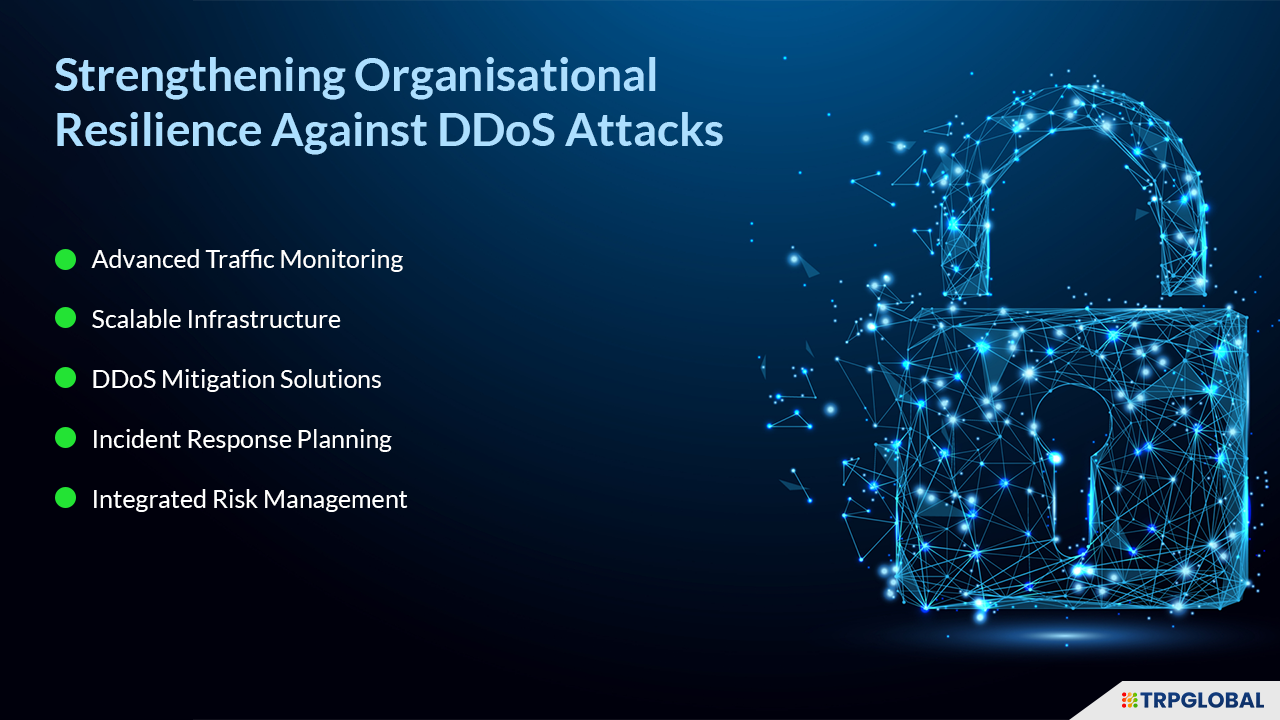
Several key measures can strengthen resilience against DDoS attacks and similar disruptions.
Real-time monitoring tools allow organisations to detect unusual traffic patterns early. Rapid identification of abnormal activity helps security teams respond before attacks escalate.
Cloud-based infrastructure and distributed networks can absorb higher volumes of traffic, reducing the risk of system overload during attack attempts.
Specialised security services can filter malicious traffic and ensure that legitimate users retain access to critical services.
Organisations should develop well-defined response procedures to address cyber disruptions quickly and effectively.
Combining cybersecurity with enterprise risk management frameworks allows organisations to assess vulnerabilities, prioritise controls, and strengthen governance structures.
These strategies not only improve security posture but also enhance overall operational resilience.
Preparing for an Evolving Cyber Threat Environment
The recent surge in coordinated cyber disruptions serves as a reminder that the cyber threat landscape continues to evolve.
As digital technologies expand and organisations increasingly rely on interconnected systems, attackers will continue to explore new ways to exploit vulnerabilities and cause disruption.
Forward-thinking organisations recognise that cybersecurity is no longer solely about preventing breaches; it is about ensuring business continuity amid uncertainty.
By embedding cybersecurity within governance, risk, and compliance strategies, companies can move from reactive defence to proactive resilience.
At TRPGLOBAL, we help organisations strengthen their Governance, Risk, and Compliance (GRC) frameworks to address the growing complexity of digital risk.
Our experts work with enterprises to:
In an environment where cyber disruptions can emerge suddenly and spread rapidly, organisations must adopt a holistic approach to managing risk.
Through strategic risk management, robust governance frameworks, and continuous monitoring, businesses can build the resilience needed to navigate an increasingly uncertain digital landscape.

In our newsletter, explore an array of projects that exemplify our commitment to excellence, innovation, and successful collaborations across industries.