

.png)
Let’s start with the basics. Strategic Risk Management (SRM) sounds like a fancy term, but it’s really about making sure your business stays strong even when things go wrong.
Life is unpredictable—whether it's a sudden economic downturn, changes in the marketplace, or unexpected competition popping up from nowhere, businesses face risks every day. Strategic risk management is the process of identifying those risks, understanding them, and finding ways to either avoid or reduce them so that your business doesn’t fall apart when the unexpected happens.
Imagine you’re steering a ship. If you don’t have a solid strategy for handling rough waters, you could end up in the middle of a storm without a plan.
That’s why strategic risk management is crucial. It's like building a safety net for your business, making sure you're always prepared for what could go wrong. And, by doing so, you also give yourself a better chance to take advantage of opportunities that come your way, without the fear of losing it all.
Let’s face it. 2024 is full of change. Businesses today are facing more unpredictability than ever. The rise of digital technologies, new global challenges, and shifting consumer behaviour mean risks are popping up faster than ever before. If you don’t manage those risks, it’s easy to get caught off guard.
Strategic risk management helps you be proactive instead of reactive. It’s about understanding your company’s vulnerabilities before they turn into bigger problems. When you manage risk well, you don’t just protect your company—you also position yourself to be more flexible and adaptable in the face of change.
In a post-pandemic world, it’s even more critical. The global crisis of 2020 shook things up for businesses everywhere. Now, companies are more aware than ever that having a solid risk management process in place is key to surviving and thriving in this new, unpredictable business landscape.
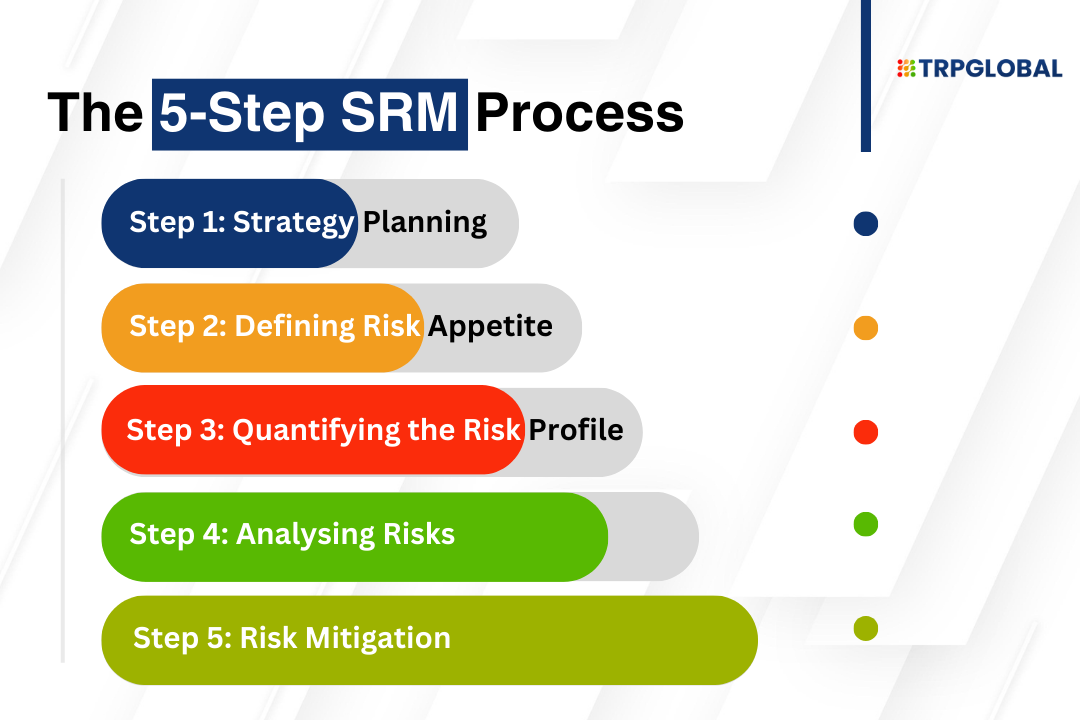
Now that we know why SRM is important, let’s look at how it works. Strategic risk management isn't just something you do once and forget about—it’s an ongoing process. The SRM process involves five steps that help you identify, assess, and handle risks so that your business stays on track.
The first step is all about understanding your business goals. You can't protect something if you don't know what you're trying to protect. That’s where strategy planning comes in. In this step, you define what success looks like for your company and figure out what risks could get in the way of achieving those goals.
Are you trying to expand into new markets? Are you launching a new product line? Whatever your goals are, strategic planning helps you map out the risks involved in getting there. It’s like planning a trip—if you don’t know your destination and what obstacles you might encounter along the way, you could end up completely off track.
Next, you need to define your "risk appetite." This is a fancy way of saying, "How much risk is your business willing to take on?" Some businesses are more risk-averse and want to play it safe, while others are more willing to take bigger chances for a higher reward.
For example, a startup might be more willing to take risks in order to grow quickly, while a well-established company might prefer to play it safe to protect their brand and assets. Understanding where your business stands in terms of risk tolerance helps guide decisions and ensures everyone is on the same page.
Once you’ve set your goals and defined your risk appetite, it’s time to dive into the details. This step involves identifying the specific risks your business might face and understanding how likely they are to happen and what their potential impact could be.
This is where tools like risk assessment matrices and probability-impact charts come into play. For example, if you’re a small online retailer, you might identify risks like data breaches or shipping delays. You then figure out how likely these things are to happen and what the consequences would be if they did.
With your risk profile in hand, the next step is to analyse the risks in detail. In this stage, you need to determine which risks pose the biggest threat to your business and which ones are more manageable.
Some risks are inevitable, like changes in the economy, while others—like internal operational failures—are within your control.
Risk analysis often involves prioritizing risks based on their likelihood and impact. This helps you understand which risks to focus on first. Once you know which risks are the most urgent, you can start to work on reducing their potential impact.
The final step in the SRM process is all about taking action. After identifying and analysing risks, you need to come up with ways to reduce them or prepare for them. This is called risk mitigation.
There are several techniques you can use to mitigate risk, including transferring the risk (like buying insurance), avoiding the risk (changing your business model), or accepting it (if it’s low-impact and manageable). The goal is to make sure that when something goes wrong, it doesn’t bring your entire business to a halt.
Strategic risk management isn’t just about generic risks like “the market could crash.” There are different types of risks you’ll encounter depending on your industry, goals, and circumstances. Understanding these risks can help you prepare better and make smarter decisions. Let’s take a look at the main types of strategic risks:
Market risks are the external threats to your business that stem from changes in the market environment. This can include things like shifts in customer preferences, economic downturns, or new competitors entering the market. For example, if your business relies on a particular demographic of customers, and that group suddenly shifts their preferences to something else, you’ll need to react quickly to stay floating.
These are internal risks that affect the day-to-day functioning of your business. Operational risks can stem from process failures, human error, or even fraud. A small error in your supply chain, for example, could result in huge delays, lost revenue, and frustrated customers. These risks are often controllable, which is why they require a clear mitigation strategy.
Financial risks are all about managing your money and investments. These risks can include issues like fluctuating interest rates, currency exchange rate movements, or liquidity problems. A business that doesn’t carefully manage its finances can quickly find itself in trouble.
Reputation is everything in today’s world of social media. A small mistake or poor decision can quickly spiral into a public relations nightmare. Reputational risks can arise from a variety of situations, such as customer complaints, employee scandals, or environmental accidents. The key is to be prepared with a crisis communication plan and act quickly to minimize the damage.
Legal risks come from potential lawsuits, regulatory changes, or non-compliance with laws and industry standards. These risks can be extremely costly, so it's crucial to stay up to date with changing laws and ensure that your business is always in compliance.
Strategic risk management doesn’t have to be a daunting task. With the right tools, you can manage risks effectively and stay ahead of potential problems. Here are some popular tools and techniques for managing risks:
Challenges in Strategic Risk Management
Even with the best strategies in place, strategic risk management can be challenging. One of the biggest obstacles businesses faces is the sheer complexity of risk landscapes. New risks can appear at any time, and it can be difficult to predict what the future will hold.
Another challenge is the human element. Getting buy-in from all stakeholders, from employees to top executives, can be tricky. Without a risk-aware culture, it’s easy for risks to be overlooked or ignored.
Strategic risk management is not just a buzzword—it’s a necessity for any business aiming to thrive in today’s unpredictable environment. By understanding and addressing market, operational, financial, reputational, and legal risks, you can ensure that your business is resilient and adaptable, no matter what challenges arise.
Implementing a well-thought-out risk management strategy not only protects your assets but also positions your company to seize new opportunities confidently.
Ready to take your business to the next level? Our experts at TRPGLOBAL can help you develop a tailored risk management strategy that works for your unique needs. Whether you’re looking to assess current risks or build a stronger foundation for the future, we’re here to guide you every step of the way.
Contact Us Now to get started on safeguarding your business and unlocking its full potential!

In our newsletter, explore an array of projects that exemplify our commitment to excellence, innovation, and successful collaborations across industries.