


For decades, hearing someone’s voice over the phone was a powerful form of validation. It was personal, direct, and hard to fake.
Not anymore.
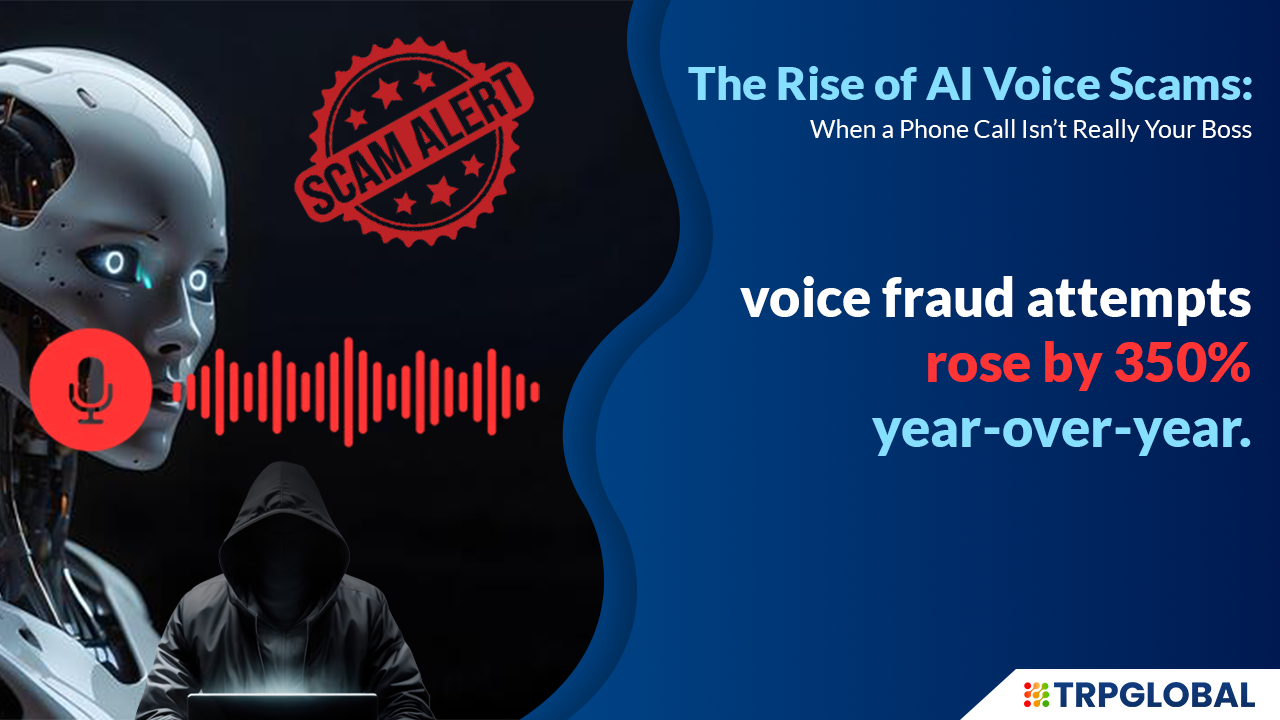
Today, AI can clone a voice in under 3 minutes with just a few seconds of audio—and use it to scam you.
And it’s not a future threat. It’s happening right now.
Deepfake audio scams use machine learning to analyze real voice recordings—podcasts, videos, social media posts, voicemail greetings—and generate a synthetic voice that sounds just like the real person.
Scammers then deploy that cloned voice to:
The result? Victims believe they’re talking to a trusted colleague, boss, or vendor—and make catastrophic decisions in seconds.
Recent reports show:
The rise isn’t surprising: cloning someone’s voice now takes just 3 to 5 minutes of audio and widely available AI tools—no sophisticated hacking skills needed.
Earlier this year, a finance employee at a multinational company in Hong Kong received a video call from their "CFO" urgently requesting a $25 million wire transfer.
The video looked real. The voice sounded real. The request felt urgent and time-sensitive.
Except… the CFO was never on that call. It was a deepfake. And the company lost the money—permanently.
Humans are wired to trust familiar voices.
In high-pressure environments (like approving urgent payments or accessing secure systems), we often act fast—especially when a “known voice” is directing us.
Add AI’s realism + urgency tactics + internal trust = a perfect storm for fraud.
No one is truly off-limits.
Most traditional fraud prevention systems are built to catch known patterns—phishing emails, suspicious login attempts, IP anomalies. But AI-generated voice scams don’t follow those old rules. There’s no obvious malware to detect, no suspicious IP to flag. The scam lives in human behavior—a familiar voice, a trusted name, and a false sense of urgency. That’s why businesses relying solely on old-school detection methods are already falling behind. Defending against AI-driven scams requires a shift from technical monitoring to human-centered vigilance combined with smarter, adaptive controls.
It’s not just that scammers can clone voices—it’s that they can do it for free or at very low cost using off-the-shelf AI platforms. In 2025, anyone with a laptop and basic tech knowledge can download tools that produce high-quality voice deepfakes within minutes. The barrier to entry has evaporated, and with it, the traditional belief that only "sophisticated cybercrime rings" could pull off these kinds of attacks. Now, small-time scammers have big-time tools, and that changes the risk landscape for every business.
It’s not enough to trust your ears anymore. Here’s how smart organizations are adjusting:
No transaction or sensitive change should be approved based only on a phone call or voice message. Always require:
Build internal training around AI voice fraud awareness:
Audit how much audio footprint your leadership team has online:
Consider using voice watermarking technologies for public recordings.
When in doubt, assume AI manipulation is a factor.
Your incident response plan should include:
As generative AI evolves, full video deepfakes (fake Zoom calls, fake Teams meetings) are becoming even more convincing.
If you think voice fraud is scary today, imagine a world where your “CEO” can hop on a video call—and isn’t real at all. We’re not far from that world. It’s time to prepare.
In a world where AI can fake voices better than most humans can recognize, trust needs to be verified—not assumed.
The phone call you pick up tomorrow?
It might sound like your boss.
It might sound urgent.
It might even sound familiar.
But unless you verify it—you’re one conversation away from a major breach.
If you’re serious about protecting your business from AI-driven scams, it’s time to rethink how trust and verification work inside your organization. Contact us to build a smarter, faster fraud defense strategy before deepfake crime hits your doorstep.

In our newsletter, explore an array of projects that exemplify our commitment to excellence, innovation, and successful collaborations across industries.