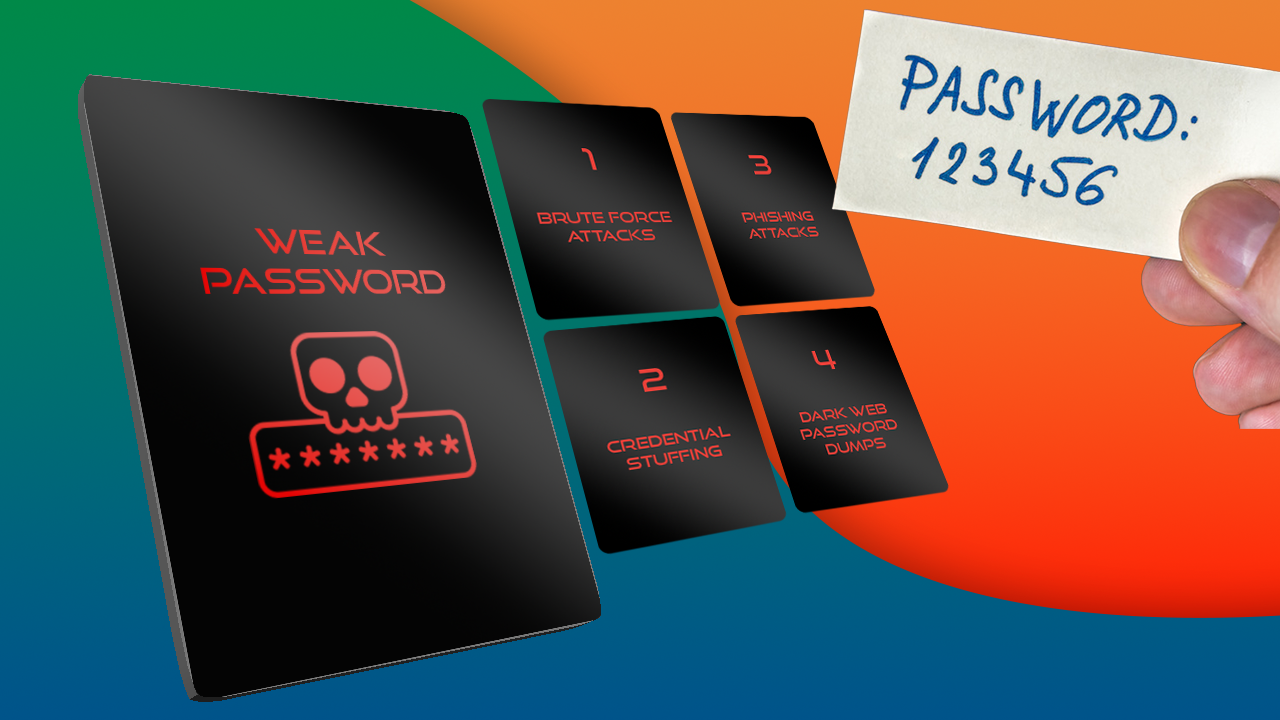
We live in an era of AI-driven cyberattacks, sophisticated hacking techniques, and billion-dollar ransomware threats—yet, millions of people still use “123456” as their password.
It sounds absurd, but year after year, password reports confirm that weak, predictable passwords remain the biggest security vulnerability. In 2024, the most commonly used passwords were “password,” “123456,” and “qwerty”—making cybercriminals’ jobs ridiculously easy.
But why do people still rely on weak passwords? And how can businesses and individuals protect themselves from credential-stuffing attacks, brute force hacks, and identity theft?
Why Are People Still Using Weak Passwords?
Despite countless cybersecurity warnings, bad password habits are still widespread. Here’s why:
1️. Convenience Over Security
People choose simple passwords because they’re easy to remember.
Problem: Simple passwords are also easy for hackers to guess.
2️. Too Many Passwords to Manage
The average user has 100+ online accounts, making it impossible to remember unique passwords for all of them.
Problem: Many people reuse the same password across multiple platforms.
3️. A False Sense of Security
Some people believe “I have nothing valuable to steal”, so they don’t think strong passwords are necessary.
Problem: Cybercriminals target all accounts, even small ones, to build larger attack networks.
4️. Companies Still Allow Weak Passwords
Many websites don’t enforce strong password policies, allowing users to set weak credentials.
Example: Some platforms don’t require multi-factor authentication (MFA), making hacking even easier.
How Hackers Exploit Weak Passwords
Weak passwords are a goldmine for cybercriminals. Here are the most common attack methods:
1️. Brute Force Attacks
Hackers use automated tools to try millions of password combinations in seconds. 🔹 Example: A weak password like “password123” can be cracked in under 1 second.
2️. Credential Stuffing
🔹 How it works:
Hackers use stolen username-password combos from previous data breaches.
They try these same credentials on multiple sites (because people reuse passwords).
If you use the same password for multiple accounts, hackers can access all of them.
🔹 Real-World Example:
In 2023, a massive credential-stuffing attack compromised over 200 million Twitter/X accounts, exposing private user data.
3️. Phishing Attacks
🔹 How it works:
Cybercriminals trick users into entering their passwords on fake websites.
Once stolen, the credentials are sold on the dark web or used in targeted attacks.
🔹 Example:
Google reports that 68% of phishing emails attempt to steal login credentials.
4️. Dark Web Password Dumps
When companies suffer data breaches, stolen passwords often end up on the dark web.
Hackers buy and sell credentials, using them for future attacks.
🔹 Example:
The RockYou2021 password leak exposed over 8.4 billion passwords, many of which are still in use today.
The Best Ways to Strengthen Password Security
Now that we understand the risks, let’s explore how to build stronger password security.
1. Use Passphrases Instead of Simple Passwords
Why?
A random phrase is harder to crack than a single word.
It’s also easier to remember than a long string of random characters.
🔹 Example of a weak password: 123456 (Can be cracked instantly) 🔹 Example of a strong passphrase: Banana-Purple-!Library2025 (Takes centuries to crack)
2. Use a Password Manager
Why?
It generates, stores, and auto-fills strong passwords.
You only need to remember one master password.
🔹 Best Password Managers (2025)
Bitwarden (Best free option)
1Password (Best for business users)
Dashlane (Best for advanced security features)
3. Enable Multi-Factor Authentication (MFA)
Why?
Even if hackers steal your password, MFA adds an extra layer of protection.
Requires a second verification step (like a text code or biometric scan).
🔹 Best MFA Options
Google Authenticator (App-based security)
Microsoft Authenticator (Great for business accounts)
YubiKey (Best physical security key)
4. Never Reuse Passwords
Why?
If one account is breached, other accounts won’t be affected.
A password manager can help you generate unique passwords for each account.
5. Regularly Check If Your Password Has Been Breached
Why?
If your password appears in a data breach, change it immediately.
🔹 Tools to Check If Your Password Was Leaked:
Google’s Password Checkup – Scans saved passwords for breaches
The Future of Password Security: Are Passwords Going Away?
With passwords being a major security risk, many companies are adopting passwordless authentication, including:
Biometric logins (Face ID, fingerprints)
Passkeys & Single Sign-On (SSO) (Google, Apple, Microsoft)
Hardware security keys (YubiKey, Titan Key)
Example: Apple, Google, and Microsoft are already phasing out passwords in favor of passkeys and biometrics for better security.
Fix the Password Problem Before It’s Too Late
Passwords are one of the biggest weaknesses in cybersecurity, but you can take control of your security today.
🔹 Key Takeaways:
Stop using weak passwords like “123456” (it’s the first thing hackers try).
Enable MFA on all critical accounts to block unauthorised logins.
Use a password manager to generate & store unique passwords.
Regularly check if your credentials were exposed in a data breach.
Consider passkeys & biometric authentication for a password-free future.
Are you guilty of using weak passwords? What security changes have you made?
Protecting your business and personal accounts requires strong password policies, MFA enforcement, and cybersecurity awareness training. Our expert cybersecurity consultants can help your organization strengthen digital security and prevent credential theft. Contact us today for a free consultation!
In our newsletter, explore an array of projects that exemplify our commitment to excellence, innovation, and successful collaborations across industries.
Thank you! Your submission has been received!
Oops! Something went wrong while submitting the form.