Artificial Intelligence (AI) is rapidly changing the world around us, and cybersecurity is no exception. As cyber threats become more sophisticated and frequent, AI offers innovative solutions to defend digital assets. However, this powerful technology also presents new challenges and risks. In this blog, we'll explore the opportunities and challenges of AI in cybersecurity, providing insights for IT and cybersecurity professionals.
AI's Transformative Role in Cybersecurity
AI's capacity to analyze vast amounts of data in real-time is revolutionizing threat detection and response. Traditional methods often struggle to keep pace with the speed and complexity of modern cyberattacks, but AI-driven security solutions can identify patterns, anomalies, and potential threats more efficiently.
Key Opportunities Presented by AI in Cybersecurity:
Enhanced Threat Detection: AI algorithms can analyze network traffic, system logs, and user behavior to identify suspicious patterns that may indicate a cyberattack.
Automated Incident Response: AI systems can be programmed to respond automatically to certain types of threats, isolating infected systems or blocking malicious IP addresses to minimize damage.
Improved Accuracy and Reduced False Positives: AI algorithms continuously learn and adapt, improving the accuracy of threat detection and reducing the number of false positives, allowing security teams to focus on genuine threats.
Strengthened Identity & Access Management: AI enhances identity and access management by continuously verifying user identities based on behavior, location, and device information, preventing breaches due to compromised credentials or insider threats.
Adaptive Security Measures: AI offers a more adaptive approach to security, continuously learning from the environment and evolving in response to new attack patterns, providing more dynamic protection against ever-changing threats.
Real-time Detection: AI systems are skilled at analyzing complex patterns and identifying irregularities at speeds and scales that exceed human capabilities. This capability enables real-time detection of threats, including malware and suspicious activities within a network.
The Economic Upsurge of AI in Cybersecurity
The AI in the cybersecurity market is not just a technological shift, but a significant economic opportunity. The global AI in cybersecurity market was valued at an estimated USD 25.35 billion in 2024. Projections estimate a compound annual growth rate (CAGR) of 24.4% from 2025 to 2030, potentially reaching USD 93.75 billion by 2030. This growth reflects the increasing demand for AI-driven solutions to combat sophisticated cyber threats and protect sensitive data. As organizations grapple with the rising complexity and volume of attacks, AI's ability to automate threat detection, incident response, and data analysis becomes indispensable
Real-World Example
Many websites now use AI tools like CAPTCHA, facial recognition, and fingerprint scanners to automatically detect whether a login attempt is genuine, preventing cybercrime tactics like brute-force attacks.
The Challenges of AI in Cybersecurity
Despite its many benefits, AI also presents challenges in the realm of cybersecurity.
Key Challenges Posed by AI:
AI-Powered Attacks: Cybercriminals are also leveraging AI to create more sophisticated and damaging attacks, including new and updated forms of malware that target both traditional and AI-enhanced systems.
Prompt Injection Attacks: Adversaries can target AI systems through prompt injection attacks, manipulating AI responses with harmful inputs.
The Need for Human Oversight: While AI can automate many tasks, human oversight is still essential to ensure that AI-powered security solutions are functioning effectively and to address complex threats that require human expertise.
Evolving Threat Landscape: Cybersecurity is an ever-evolving field, and AI systems must continuously adapt to new threats and attack patterns. This requires ongoing investment in research and development to ensure that AI-driven security solutions remain effective.
Lack of Expertise: Automation is important in cybersecurity given the shortage of expert security staff.
Constant Learning: Traditional cybersecurity measures may not adapt to emerging threats but AI learns and evolves in response to new attack patterns.
Data Volume: AI allows organizations to keep pace and handle massive volumes of threats.
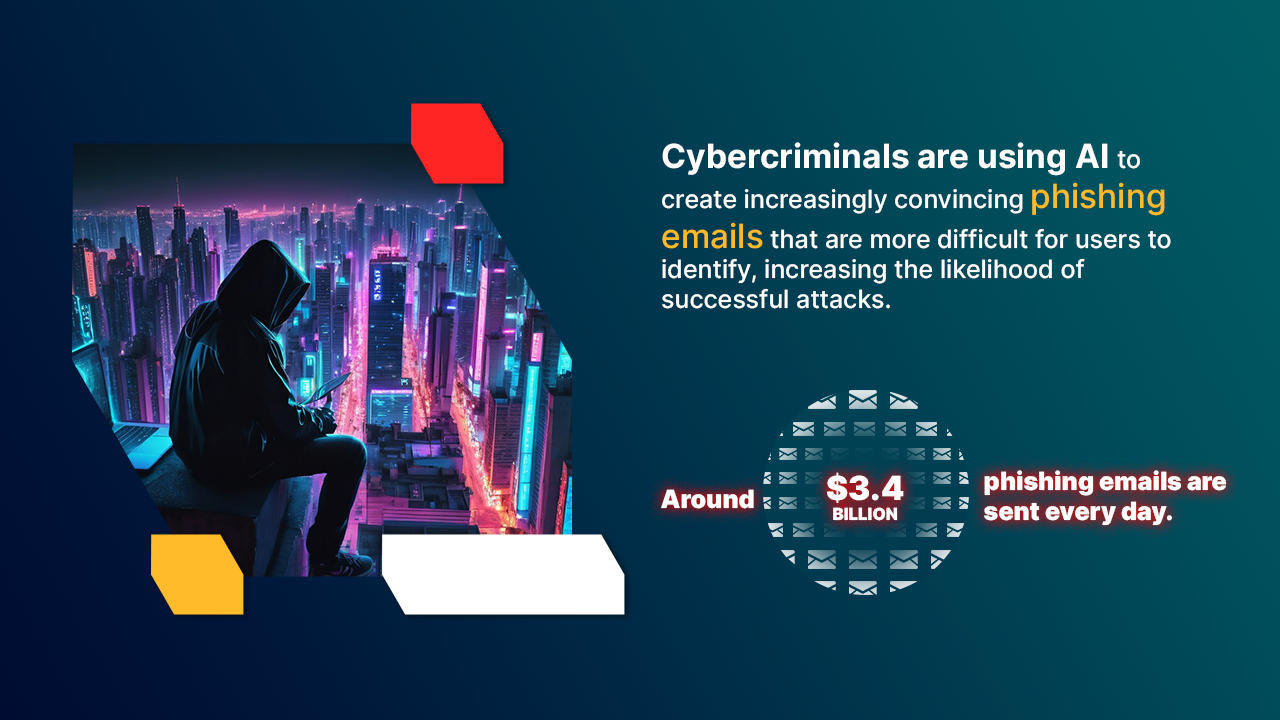
Cybercriminals are using AI to create increasingly convincing phishing emails that are more difficult for users to identify, increasing the likelihood of successful attacks.
Leveraging AI for Cybersecurity: Best Practices
To harness the power of AI for cybersecurity effectively, organizations should follow these best practices:
Enhance Threat Detection & Prediction: AI excels at analyzing large volumes of data to identify patterns and anomalies that signal potential threats.
Automate Incident Response: AI systems can be programmed to respond to certain types of threats automatically, reducing the response time and minimizing damage.
Improve Phishing Detection: AI can scan email content, URLs, and attachments for signs of malicious intent.
Prioritize Continuous Learning: AI algorithms improve the accuracy of threat detection by continuously learning and adapting.
Combine AI with Human Expertise: Recognize that AI is a tool to augment human capabilities, not replace them. AI can automate repetitive tasks and provide valuable insights, but human expertise is still needed to make critical decisions and address complex threats.
Implement Robust Security Protocols: Ensure that AI-powered solutions are regularly updated and monitored to prevent them from becoming exploitable.
Artificial intelligence offers tremendous potential for revolutionizing cybersecurity, enabling organizations to detect, prevent, and mitigate cyberattacks more effectively. However, it also introduces new challenges that must be addressed proactively. By understanding both the opportunities and challenges of AI in cybersecurity and following best practices, organizations can harness the power of AI to strengthen their security posture and protect their digital assets.
Ready to explore how AI can transform your cybersecurity strategy? Contact us today to learn more about our AI-driven security solutions!
In our newsletter, explore an array of projects that exemplify our commitment to excellence, innovation, and successful collaborations across industries.
Thank you! Your submission has been received!
Oops! Something went wrong while submitting the form.