


The face of cybercrime is changing. Once the domain of lone hackers working in the shadows, cybercrime is now becoming an organized and scalable business model. One of the most alarming developments in this space is the rise of Scam-as-a-Service (SaaS), a model where cybercriminals offer their malicious services, tools, and expertise to anyone willing to pay.
This blog explores the phenomenon of Scam-as-a-Service, explaining how it works, its impact, and how IT and cybersecurity professionals can defend their organizations against this growing threat.
Scam-as-a-Service (SaaS) is the business model that allows cybercriminals to rent out their hacking tools, services, and malware to anyone, regardless of their technical ability. Think of it like a subscription-based service—only instead of providing software to enhance productivity, these services offer tools that enable cybercrime.
These services cover everything from phishing kits, botnets, and ransomware to money laundering services and fraud platforms. Cybercriminals can even provide customer support to help users execute attacks, making this a booming industry for malicious actors.
The Scam-as-a-Service model is disturbingly simple and user-friendly, allowing attackers to outsource key elements of their operations:
Understanding the practical application of Scam-as-a-Service is crucial. Here are a few examples of how these services have been used in the wild:
Phishing is one of the oldest and most widely used forms of cybercrime. With phishing-as-a-service, criminals can easily purchase pre-made phishing kits that allow them to impersonate legitimate companies and steal users' credentials.
These kits come with templates for fake login pages, automated email spoofing tools, and scripts to harvest personal data. Attackers can customize these kits to target various companies or individuals, making phishing more accessible and scalable.
Example: In 2020, a group of attackers leveraged SaaS phishing kits to impersonate Zoom and Microsoft, exploiting the rise of remote work and gaining access to employee credentials.
Ransomware-as-a-Service is one of the most profitable models in Scam-as-a-Service. Instead of developing their own ransomware, cybercriminals can rent malware and use it to carry out attacks. These services often come with user-friendly interfaces that allow even less experienced hackers to launch devastating attacks.
The customer typically receives a share of the ransom payment, while the provider keeps a cut for supplying the malware and providing support.
Example: The infamous REvil ransomware group operates on a RaaS model, allowing criminals worldwide to rent ransomware and infect organizations. REvil has been behind high-profile attacks, including the Kaseya supply chain breach in 2021.
Botnets—large networks of compromised computers—are a key component of many cybercrimes. Criminals use botnets to carry out Distributed Denial-of-Service (DDoS) attacks, spread malware, or send spam.
Botnet-as-a-Service providers rent out access to large botnets, enabling their customers to control these networks for illegal activities.
Example: The Mirai botnet was used in one of the largest DDoS attacks in history. The botnet targeted major websites and caused significant disruptions, proving how accessible and powerful botnet-as-a-service can be.
The rise of Scam-as-a-Service has made cybercrime more accessible, profitable, and difficult to combat. Here’s why it’s such a threat:
With Scam-as-a-Service, cybercrime is no longer limited to experienced hackers. Individuals with no technical skills can now access sophisticated tools and carry out attacks, making cybercrime more democratic. Essentially, anyone with a computer and a credit card can become a cybercriminal.
SaaS models allow cybercriminals to scale their attacks. A single fraudster can launch mass phishing campaigns, run ransomware attacks, or deploy botnets with little effort. The ease of access to these services means cybercrime operations can grow quickly and target more victims.
Scam-as-a-Service allows criminals to easily rotate their tools and techniques, making detection and mitigation more difficult. With customer support and frequent updates, cybercriminals can stay one step ahead of security measures.
Because these services are often sold on the dark web and used globally, it’s difficult for law enforcement to track and shut them down. This creates an international problem that requires a coordinated effort between governments, private sector organizations, and cybersecurity professionals.
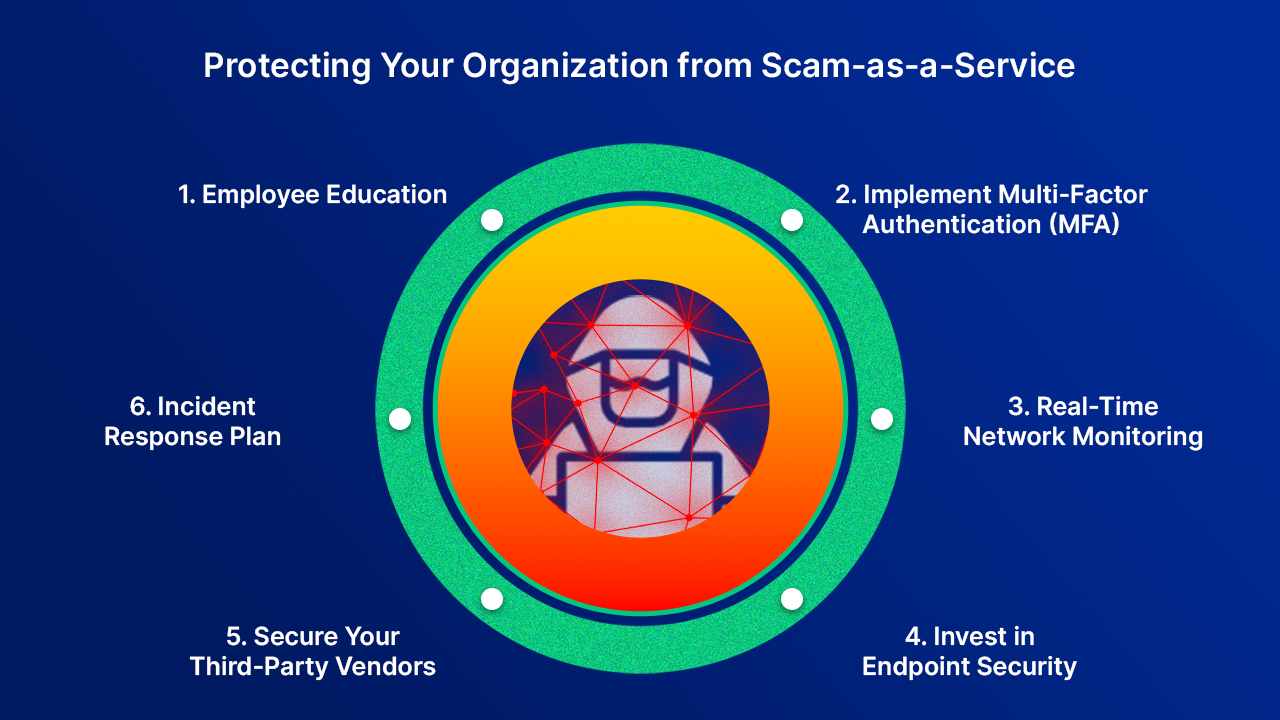
As an IT or cybersecurity professional, it's essential to stay ahead of these evolving threats. Here are some steps to protect your organization from Scam-as-a-Service:
Employees remain the first line of defense. Regularly train your team on how to recognize phishing attacks, social engineering tactics, and suspicious emails. Awareness is key to preventing many attacks.
MFA adds an extra layer of security by requiring users to provide more than one form of verification when accessing accounts. This makes it much harder for criminals to gain unauthorized access, even if they have login credentials.
Continuous monitoring of your network can help identify unusual activity before it escalates. Intrusion Detection Systems (IDS) and Security Information and Event Management (SIEM) solutions are invaluable for spotting early signs of a cyberattack.
Endpoint security is crucial for protecting devices that access your network. This includes regular patching, antivirus software, and using EDR (Endpoint Detection and Response) solutions to quickly respond to any threats.
A large portion of data breaches happens through third-party vendors. Make sure to vet and regularly audit your suppliers’ cybersecurity practices to prevent them from becoming an entry point for attackers.
In case of an attack, a clear incident response plan is essential. This ensures that your organization can respond quickly and minimize damage. Regularly test and update your plan to keep it relevant.
Scam-as-a-Service represents a significant shift in the world of cybercrime, turning illicit activities into a service that can be easily accessed, rented, and deployed. This model lowers the barriers to entry for cybercriminals, making sophisticated attacks accessible to a much larger group of individuals.
As cybersecurity professionals, it’s crucial to understand the scope of this growing threat and take proactive measures to protect your organization. By staying informed, educating your team, and using the latest cybersecurity tools, you can reduce the risk of falling victim to Scam-as-a-Service and other emerging cybercrime trends.
Need Help Securing Your Organization from Evolving Cyber Threats?
We specialize in comprehensive cybersecurity solutions designed to defend against the latest threats, including Scam-as-a-Service. Contact us today for a consultation and ensure your organization stays secure in this new era of cybercrime.

In our newsletter, explore an array of projects that exemplify our commitment to excellence, innovation, and successful collaborations across industries.