


As businesses continue their digital transformation in 2025, cybersecurity threats are evolving at an alarming pace. The widespread adoption of Software as a Service (SaaS) applications has brought increased flexibility and efficiency, but it has also exposed organizations to new vulnerabilities.
Recent reports indicate a 300% rise in SaaS security breaches over the past year, underscoring the urgent need for companies to reassess their cybersecurity strategies. This article explores the top SaaS vulnerabilities, real-world breaches, and best practices to secure digital assets in the modern cloud landscape.
According to the 2025 SaaS Security Threat Report by Obsidian Security, SaaS-related breaches have reached record levels. Alarmingly, 99% of these compromises originate from identity provider (IdP) vulnerabilities, highlighting the need for organizations to strengthen identity security.
A significant breach involving Snowflake, a cloud data warehousing platform, exemplified the risks of misconfigured security settings. Attackers exploited a lack of multi-factor authentication (MFA) and weak access controls, leading to major data exfiltration and financial losses.
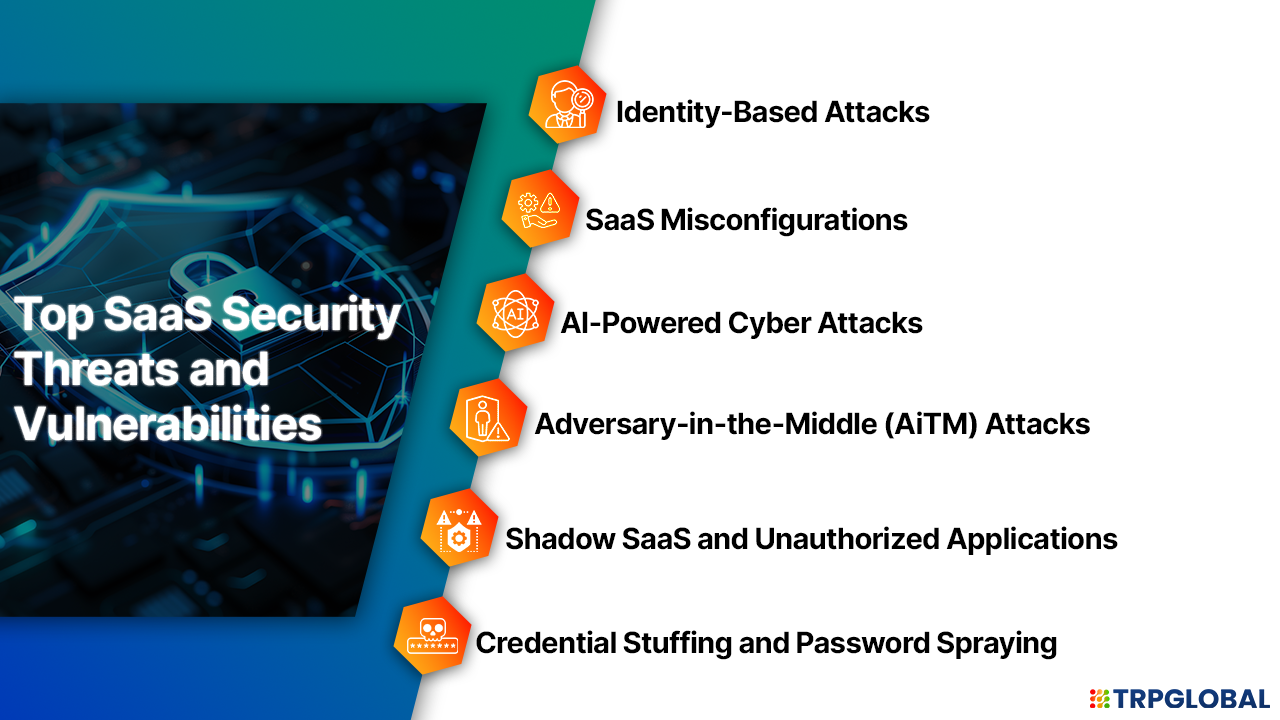
The shift to cloud-based applications has transformed the cybersecurity landscape. Organizations must address these critical SaaS vulnerabilities:
With 99% of SaaS breaches stemming from identity-related compromises, businesses must secure authentication processes. Hackers frequently exploit stolen or weak credentials to infiltrate critical systems.
Improperly configured permissions and security settings create vulnerabilities that attackers can exploit. The Snowflake breach, for example, was largely due to misconfigured access controls.
Cybercriminals are leveraging machine learning and artificial intelligence to automate phishing campaigns, conduct credential stuffing, and launch sophisticated attacks at scale.
Attackers use session hijacking techniques to intercept login credentials and authentication tokens, bypassing traditional security defences.
Unapproved SaaS applications, often adopted by employees without IT oversight, introduce significant security risks. Without proper monitoring, these applications can become backdoors for cybercriminals.
A large portion of cyberattacks relies on exploiting reused or weak passwords across multiple platforms. Automated tools allow hackers to test thousands of login credentials within seconds.
Organizations must adopt a proactive security approach to protect against SaaS-related cyber threats. The following best practices are essential:
With 99% of SaaS breaches linked to identity-based attacks, organizations must:
Routine security assessments help organizations identify and mitigate vulnerabilities before attackers exploit them:
A Zero zero-trust architecture (ZTA) ensures that no user or device is automatically trusted. Key components include:
Human error accounts for a significant percentage of security breaches. Organizations should:
Advanced AI-powered cybersecurity solutions help organizations detect and respond to threats in real time. These tools can:
Many high-profile SaaS breaches originate from third-party integrations. Each external vendor introduces potential vulnerabilities that could be exploited by cybercriminals.
One notable breach in 2024 involved a third-party API vulnerability in an HR software platform, leading to the exposure of millions of employee records across multiple Fortune 500 companies.
As cyber threats continue to evolve, organizations must prepare for emerging risks:
Cybercriminals are increasingly using AI-driven malware to bypass security controls and automate large-scale attacks.
With the rise in SaaS breaches, governments and regulatory bodies are tightening security requirements. Organizations must comply with:
The growing use of unauthorized SaaS applications by employees poses new security challenges. Organizations must enforce clear policies to govern SaaS adoption and security oversight.
The 300% increase in SaaS security breaches over the past year highlights the urgent need for organizations to adopt stronger cybersecurity measures. A proactive approach to identity security, third-party risk management, and zero trust architecture will be critical in mitigating future threats.
If your organization needs guidance on fortifying its SaaS security posture, contact our team of cybersecurity specialists for a free security audit.

In our newsletter, explore an array of projects that exemplify our commitment to excellence, innovation, and successful collaborations across industries.