


As we stand on the brink of a technological revolution, the rise of quantum computing presents both opportunities and challenges for data security. While quantum computers promise to solve complex problems at unprecedented speeds, they also threaten to undermine the cryptographic systems that currently protect our sensitive information. Enter post-quantum cryptography (PQC)—a new frontier in data security designed to withstand the potential onslaught of quantum attacks. In this blog, we will explore what post-quantum cryptography is, why it matters, and how organizations can prepare for this next era of data security.
Post-quantum cryptography refers to cryptographic algorithms that are believed to be secure against the capabilities of quantum computers. Unlike traditional cryptographic methods that rely on mathematical problems like integer factorization or discrete logarithms—problems that quantum computers could potentially solve in a fraction of the time—PQC is based on problems that are currently considered difficult for both classical and quantum computers.
The urgency for post-quantum cryptography stems from the looming threat posed by quantum computers. Quantum algorithms, such as Shor's algorithm, can efficiently break widely used public-key encryption methods like RSA and ECC (Elliptic Curve Cryptography). This means that sensitive data encrypted today could be at risk in the near future if quantum computers become sufficiently powerful.
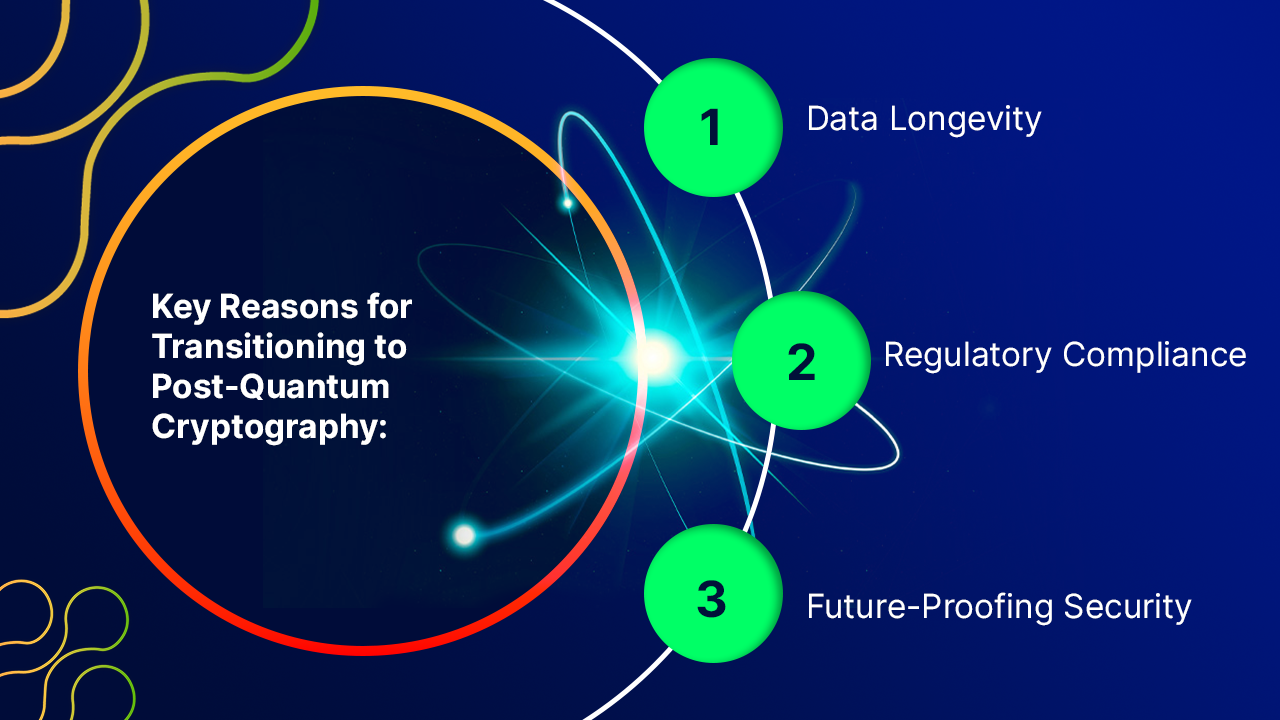
Post-quantum cryptography encompasses several different approaches, each relying on distinct mathematical problems. Here are some key types:
Lattice-based cryptography is one of the most promising areas in PQC. It relies on the hardness of problems related to lattices in high-dimensional spaces. Algorithms like NTRU and Learning With Errors (LWE) are examples that have shown resilience against both classical and quantum attacks.
NTRU has been studied for over two decades without any feasible attacks being discovered, making it a strong candidate for post-quantum encryption.
This approach involves solving systems of multivariate equations, which is computationally hard. The Rainbow signature scheme is an example that utilizes this method for secure digital signatures.
Code-based cryptography relies on error-correcting codes and has been around since the 1970s. The McEliece encryption system is a notable example that remains secure against quantum attacks.
Hash-based signatures use hash functions as their foundation and are considered secure against quantum attacks due to their reliance on one-way functions. They offer a straightforward approach to digital signatures.
This newer area focuses on mathematical structures called isogenies between elliptic curves. While still in its infancy, it shows promise as a viable post-quantum solution.
While symmetric key algorithms are not immune to quantum attacks, increasing key lengths can effectively mitigate risks posed by Grover's algorithm, which speeds up brute-force attacks on symmetric ciphers.
The National Institute of Standards and Technology (NIST) has been at the forefront of developing post-quantum cryptographic standards since launching its PQC project in 2016. NIST's ongoing efforts include evaluating candidate algorithms through a rigorous selection process aimed at identifying those that can withstand both classical and quantum attacks.
In August 2024, NIST announced its first set of post-quantum cryptographic standards, which include algorithms based on lattice-based and hash-based approaches. These standards will provide a framework for organizations looking to transition to more secure encryption methods.
Organizations must take proactive steps to prepare for the transition to post-quantum cryptography:
Conduct an audit of existing cryptographic systems to identify vulnerabilities related to potential quantum threats. This includes evaluating which algorithms are currently in use and their susceptibility to quantum attacks.
Keep abreast of advancements in post-quantum cryptography by following relevant industry news, attending conferences, and participating in workshops focused on PQC solutions.
Transitioning to post-quantum algorithms will not happen overnight. Develop a phased approach that allows for gradual implementation while ensuring compatibility with existing systems.
Equip your team with the knowledge and skills necessary to understand and implement post-quantum solutions effectively. This may involve training sessions or partnerships with experts in the field.
Engage with other organizations facing similar challenges in adopting PQC solutions. Collaborative efforts can lead to shared insights and best practices that facilitate smoother transitions.
Post-quantum cryptography represents a critical evolution in data security as we prepare for a future where quantum computing poses significant risks to traditional encryption methods. By understanding the importance of PQC and taking proactive steps toward its implementation, organizations can safeguard their sensitive information against emerging threats.
As we move into this new era of cybersecurity, staying informed and adaptable will be key components in ensuring robust protection against potential vulnerabilities posed by quantum computing technologies.
Ready to fortify your organization's defenses? Contact us today for expert guidance on transitioning to post-quantum cryptographic solutions!

In our newsletter, explore an array of projects that exemplify our commitment to excellence, innovation, and successful collaborations across industries.