


Not the Hollywood hacker stereotype—this is the real, structured world of cybercriminals. In 2025, they don’t wear hoodies and work alone in dark rooms. They run operations like modern businesses: they have budgets, KPIs, even HR. They use automation, AI, and scalable delivery models to execute attacks with surgical precision.
To stop them, we need to think like them. This blog takes you inside the hacker’s playbook—how they operate, what they target, and most importantly, how you can stay ahead.
Cybercriminals are no longer amateurs; they’re entrepreneurs.
Their approach mirrors the business world:
And just like a business, they specialize: some handle recon, others build phishing kits, while some only focus on extortion negotiations. Welcome to the cybercrime gig economy.
Hackers today use tools that rival enterprise-level solutions—but for criminal gain.
Anyone can now buy or subscribe to phishing kits online. These come with:
It’s turnkey cybercrime, available by subscription.
One of the most alarming trends in 2025 is the rise of deepfake scams. Criminals can now impersonate voices and faces of executives on live video calls. A Hong Kong firm was recently tricked into wiring $25 million after a CFO’s deepfaked video instructed the transfer.
Criminals no longer need to build malware. They lease ransomware tools and infrastructures and split profits with affiliates. It’s franchise cybercrime.
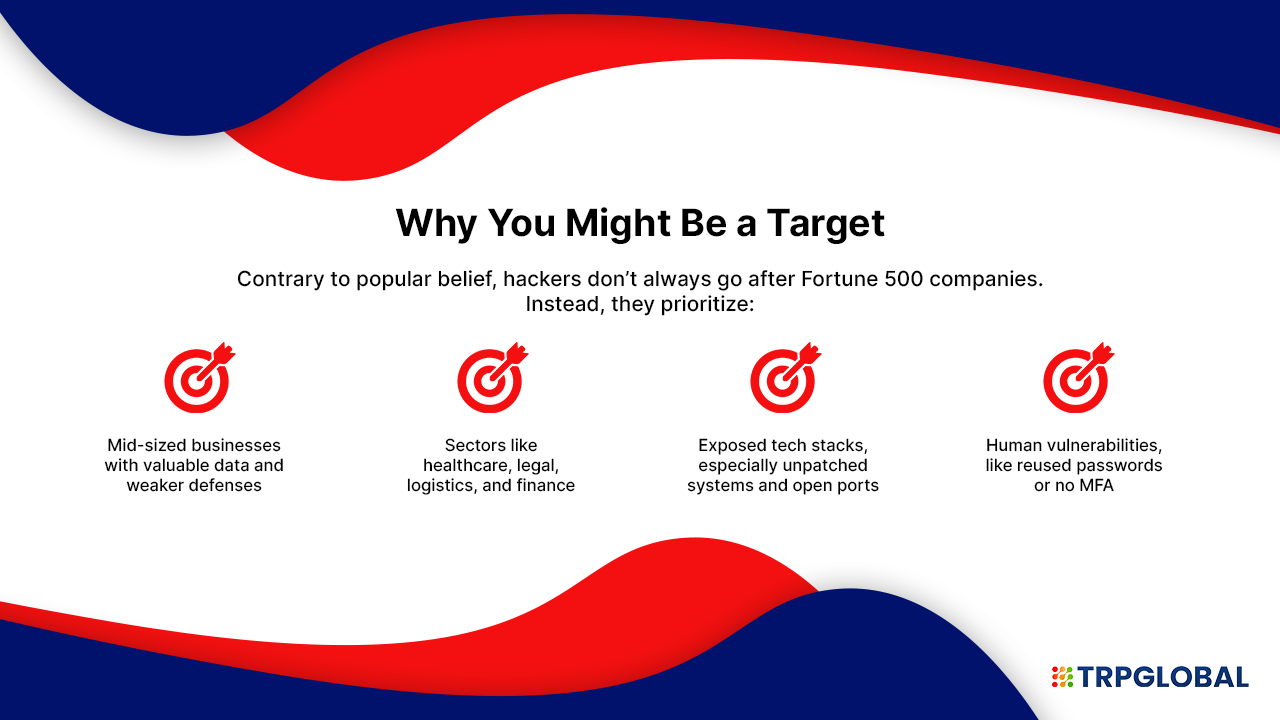
Contrary to popular belief, hackers don’t always go after Fortune 500 companies. Instead, they prioritize:
In one real case, a logistics firm in Texas was breached after an employee responded to a fraudulent LinkedIn message. Within 72 hours, their Oracle ERP system was encrypted, halting operations for 9 days.
Don’t trust anyone—inside or outside—without verification.
Tools to explore: Okta, Oracle Identity Cloud, Microsoft Entra
Verizon’s 2024 DBIR found that 82% of breaches exploited known, unpatched vulnerabilities.
Your employees are your first—and often last—line of defense.
Many companies have policies, but few have plans they’ve practiced.
When a breach happens, seconds matter—and chaos is expensive.
Don’t rely on yesterday’s news to protect against today’s threats.
In late 2024, a mid-sized bank in Central Europe avoided a full-scale ransomware breach. Here’s how:
The attackers gave up after discovering strong lateral movement controls and email monitoring. Defense isn’t just about walls—it’s about resilience.
The cyber threat landscape is evolving. Expect to see:
Cybersecurity isn’t static. Neither are your attackers.
A growing concern in the cybersecurity community is the professionalization of Initial Access Brokers. These are individuals or groups that specialize in breaching a company’s perimeter, then selling that access to other cybercriminals on the dark web.
According to Group-IB, the IAB market tripled in 2024, with credentials to mid-sized firms being sold for as little as $200–$500. This means your business could be compromised long before a full-scale attack begins. Monitoring for suspicious logins and privileged access abuse is no longer optional—it's essential.
You can be fully ISO 27001, HIPAA, or GDPR compliant and still get breached.
Cybercriminals don’t care about checkboxes. They care about whether your systems are exposed, whether your staff can be tricked, and whether you’ll pay.
Compliance gives you a foundation. But real cybersecurity means going beyond the audit, integrating real-time threat detection, cultural awareness, and scenario-based planning into your everyday operations.
Cybersecurity in 2025 isn’t just about tools or spending. It’s about outsmarting your adversary.
That starts with understanding how they work, how they think, and where they’re most likely to attack. Once you understand that, you can build defenses that not only prevent attacks—but also make your organization a poor target to begin with.
If you want to beat hackers at their own game, you have to think like one—and then be two steps ahead.
Our cybersecurity consultants specialize in helping businesses like yours stay ahead of evolving threats. Whether you need a full security audit, a Zero Trust rollout, or a response plan overhaul—we’ve got the expertise to help.
Schedule a free consultation today, and let’s make sure your business isn’t tomorrow’s headline.

In our newsletter, explore an array of projects that exemplify our commitment to excellence, innovation, and successful collaborations across industries.