

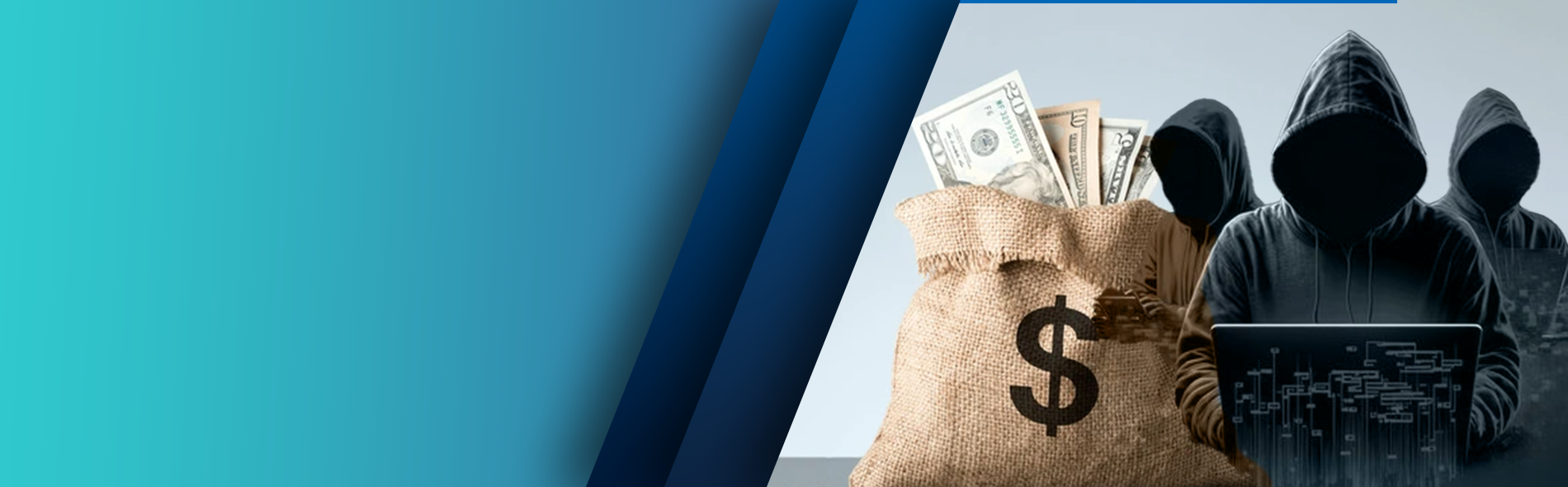
Cyber heists are no longer the stuff of Hollywood movies—they’re real, audacious, and often devastating. Over the past decade, hackers have pulled off some of the most elaborate and shocking cyberattacks, targeting everything from multinational corporations to government institutions. These heists have exposed vulnerabilities in even the most secure systems, proving that no one is immune. In this blog, we’ll explore some of the wildest cyber heists of the last ten years, break down how they happened, and uncover lessons every organization can learn to stay protected.
Impact: $81 million stolen
Method: Exploiting SWIFT banking systems
In February 2016, hackers infiltrated the Bangladesh Bank’s systems and used the SWIFT (Society for Worldwide Interbank Financial Telecommunication) network to issue fraudulent transfer requests. Their goal? To steal nearly $1 billion from the bank’s account at the Federal Reserve Bank of New York. While most transfers were blocked, $81 million was successfully funneled into accounts in the Philippines and vanished into local casinos.
The heist was so meticulously planned that hackers even manipulated printers to prevent bank officials from seeing confirmation messages for fraudulent transactions.
Even highly secure financial systems like SWIFT are not invulnerable. Organizations must implement multi-layered security measures, including real-time monitoring and anomaly detection, to catch unusual activities early.
Impact: 3 billion accounts compromised
Method: Hacker-for-hire scheme
In what remains one of the largest data breaches in history, Yahoo suffered two attacks between 2013 and 2014 that compromised all 3 billion user accounts. The attackers gained access to sensitive information such as email addresses, hashed passwords, and security questions. Shockingly, Yahoo only disclosed these breaches years later in 2016.
The breach was linked to Russian agents who used a hacker-for-hire scheme to target high-ranking U.S. officials and private citizens.
Transparency is critical during a crisis. Organizations must notify affected users promptly to mitigate reputational damage and allow individuals to take protective actions like changing passwords.
Impact: 110 million customers’ data stolen
Method: Malware via third-party vendor
In December 2013, hackers targeted retail giant Target by exploiting vulnerabilities in a third-party vendor’s system—an HVAC company with access to Target’s network. Using malware known as RAM scraping, they stole credit card information from 40 million customers and personal data (names, addresses, phone numbers) from another 70 million.
The breach wasn’t even discovered by Target; U.S. intelligence services flagged suspicious banking activity tied to their systems.
Third-party vendors can be a weak link in your cybersecurity chain. Businesses must vet their partners’ security practices and limit third-party access to sensitive systems.
Impact: 94 million users affected; over $10 billion in damages
Method: Exploiting software vulnerabilities
In one of the most recent high-profile attacks, the Clop ransomware group exploited a vulnerability in MOVEit Transfer software—a tool widely used for secure file transfers. The breach affected thousands of organizations across sectors like government, healthcare, and finance. Sensitive data was exfiltrated, and ransom demands were made under threat of public leaks.
This attack highlighted how a single software vulnerability could ripple across industries globally.
Regular vulnerability assessments and timely patching are non-negotiable in today’s threat landscape. Organizations must also have incident response plans ready to minimize damage when breaches occur.
.png)
Impact: Sensitive employee data leaked; unreleased films exposed
Method: Spear-phishing emails
In November 2014, Sony Pictures became the target of a devastating cyberattack attributed to North Korean hackers. The attackers leaked confidential emails, employee data (including salaries), and unreleased films online. They also demanded that Sony cancel the release of "The Interview," a satirical film about North Korea’s leader Kim Jong-un.
The attack caused massive embarrassment for Sony and highlighted how geopolitical tensions can spill over into corporate cyberattacks.
Organizations must prepare for politically motivated attacks by securing sensitive communications and educating employees on recognizing phishing attempts.
Impact: Fuel shortages across the U.S.; $4.4 million ransom paid
Method: Compromised password
Hackers from the DarkSide ransomware group targeted Colonial Pipeline—the largest fuel pipeline operator in the U.S.—by gaining access through a single compromised password. The attack disrupted fuel supplies across the East Coast for days until Colonial paid a $4.4 million ransom to regain control of its systems.
This attack underscored how critical infrastructure is increasingly becoming a target for cybercriminals.
Strong password policies and multi-factor authentication (MFA) are essential defenses against unauthorized access. Additionally, organizations managing critical infrastructure must invest in advanced cybersecurity measures like network segmentation.
Impact: $610 million stolen (later returned)
Method: Exploiting smart contract vulnerabilities
In August 2021, an anonymous hacker exploited vulnerabilities in Poly Network’s smart contracts to siphon off $610 million worth of cryptocurrency assets across multiple blockchains. Surprisingly, after public pressure and negotiation with Poly Network officials, the hacker returned all stolen funds.
This incident highlighted both the risks and complexities of securing decentralized finance (DeFi) platforms.
Smart contract audits are essential for identifying vulnerabilities before deployment. Blockchain projects must also establish clear protocols for responding to breaches quickly.
Impact: Over $100 million extorted before takedown
Method: FBI hack-back operation
The Hive ransomware gang extorted over $100 million from 1,500 organizations during an 18-month spree before being dismantled by an FBI-led operation in January 2023. The FBI hacked Hive’s server infrastructure, seized its decryption keys, and distributed them to victims—effectively neutralizing one of the most notorious ransomware groups at that time.
Collaboration with law enforcement can be instrumental in combating ransomware threats. Organizations should report incidents promptly to benefit from coordinated efforts against attackers.
These cyber heists demonstrate that no organization is too big or too small to be targeted by hackers. From exploiting software vulnerabilities to leveraging weak passwords or phishing schemes, attackers use diverse methods to infiltrate systems—and they’re constantly evolving their tactics.
Here are key takeaways for businesses:
Cybersecurity isn’t just an IT issue—it’s a business imperative that requires vigilance at every level of an organization. Hackers don’t sleep—but with preparation and proactive measures, businesses can stay one step ahead.
Are you ready to strengthen your cybersecurity defenses? Contact us today for expert guidance on protecting your organization from evolving threats!

In our newsletter, explore an array of projects that exemplify our commitment to excellence, innovation, and successful collaborations across industries.