

.png)
In today’s digital-first world, cybersecurity is no longer just an IT problem. For industries like construction, which traditionally relied on manual processes, the integration of technology has brought immense benefits but also significant risks. Imagine your construction management software being hacked or project plans leaked to competitors. Scary, isn’t it? Cybersecurity in construction isn’t a buzzword; it’s a necessity. Let’s explore why these matters and what steps you can take to protect your business.
Construction firms are increasingly becoming prime targets for cybercriminals. Why? Because many companies in this sector are lagging in cybersecurity measures while handling valuable data such as blueprints, client details, and financial transactions. The lack of robust defences makes construction companies an easy target for ransomware, phishing, and data breaches.
For example, imagine a hacker encrypting your project files and demanding a ransom. Such ransomware attacks can paralyze operations and lead to financial losses. According to a study, ransomware has evolved into a method for data breaches, where attackers not only lock systems but also threaten to leak sensitive information if the ransom isn’t paid.
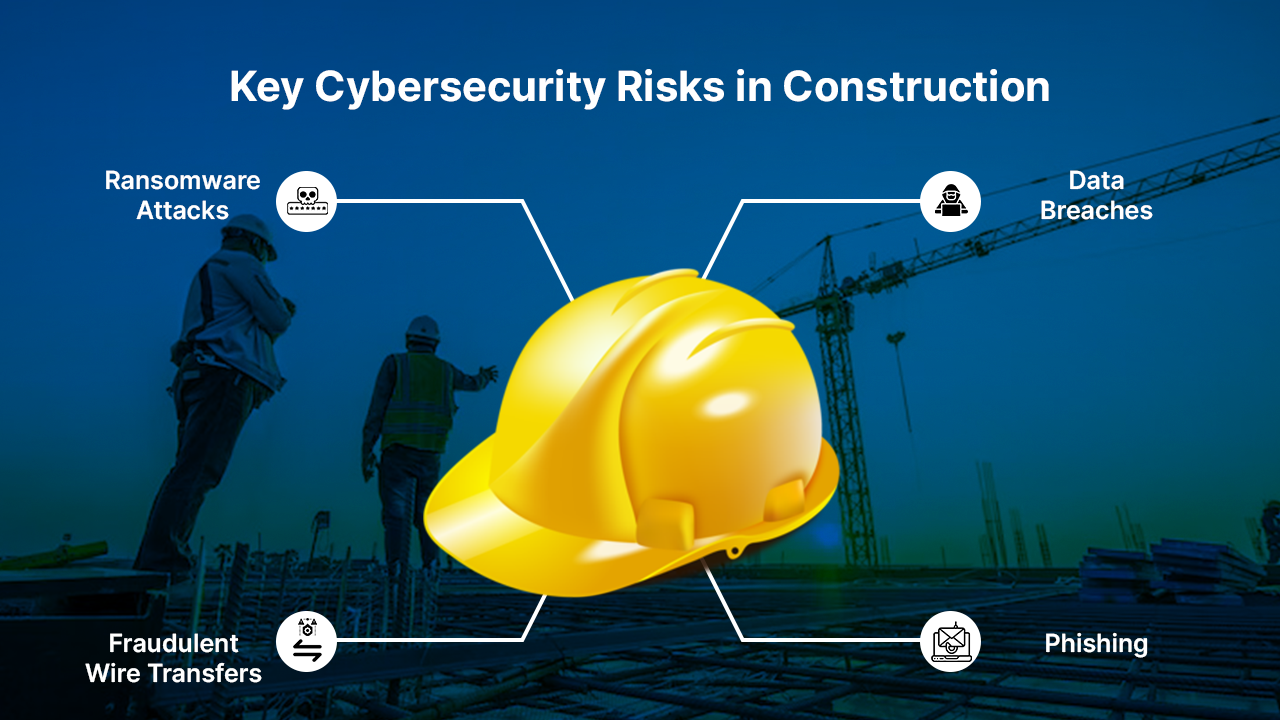
Unlike sectors like finance or healthcare, the construction industry has been slower to adopt advanced cybersecurity practices. Many firms rely on outdated systems or lack a dedicated IT team, making them vulnerable to modern threats. Moreover, relying on third-party vendors and using mobile devices on-site further increases the risk of a cyberattack.
For instance, imagine a subcontractor’s poorly secured system being hacked. This could serve as a gateway to your company’s network, so it’s essential to assess the security measures of your vendors and partners.
Let’s consider the case of a mid-sized construction firm that fell victim to ransomware. The attackers demanded a six-figure ransom, threatening to leak sensitive client details. The company’s operations were halted for weeks, causing delays in projects and loss of trust among clients.
What could they have done differently? Implementing regular data backups and storing them offline could have allowed them to restore their systems without paying the ransom. Additionally, MFA and employee training might have prevented the attack in the first place.
When you invest in cybersecurity, you’re not just protecting data; you’re safeguarding your reputation, ensuring business continuity, and building trust with clients. A robust cybersecurity strategy can:
As technology evolves, so will the threats. Cyber-physical systems, which integrate digital and physical elements in construction projects, are becoming the norm. These systems offer immense benefits in terms of efficiency and control but also introduce new vulnerabilities. Staying ahead of the curve requires continuous investment in cybersecurity tools and practices.
Feeling overwhelmed? Don’t worry; you’re not alone. Cybersecurity might seem complex, but taking the first step is half the battle. Start by conducting a risk assessment and prioritizing the implementation of basic security measures like MFA and employee training. Remember, even small steps can make a big difference.
Protecting your construction business from cyber threats isn’t just about avoiding risks; it’s about ensuring growth and stability in a digital age. Take action today and build a safer tomorrow. For expert guidance and tailored cybersecurity solutions, contact us. Let’s secure your business together!

In our newsletter, explore an array of projects that exemplify our commitment to excellence, innovation, and successful collaborations across industries.