


Cybersecurity threats don’t always come in the form of ransomware or zero-day exploits. Sometimes, the danger is far less technical—but just as disruptive. One recent example making headlines is the viral hoax known as the “Dance of the Hillary” — a fake message warning users not to open a supposedly malicious video link.
While there’s no real virus involved, the rapid spread of this hoax reveals something bigger: how misinformation can exploit fear and digital illiteracy, becoming a risk vector all its own.
In this blog, we’ll break down what the “Dance of the Hillary” hoax is, why it gained traction, and what cybersecurity teams can learn from it to strengthen resilience—not just against malware, but against disinformation too.
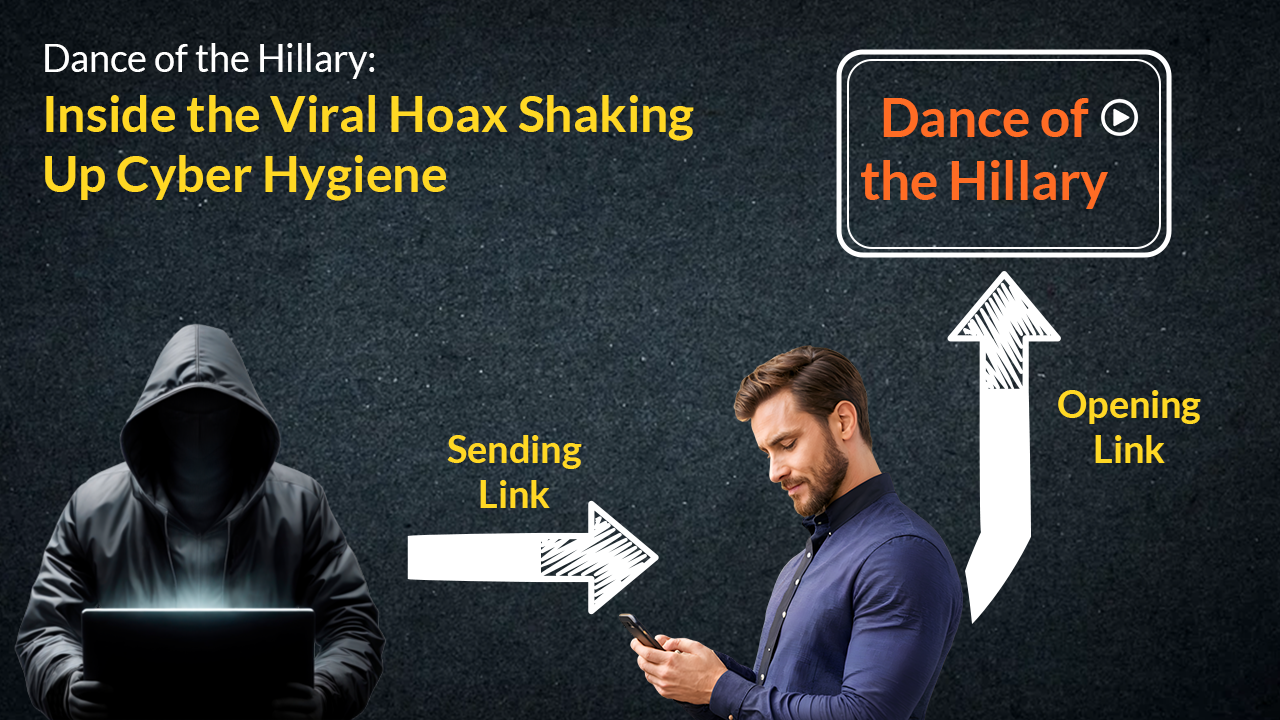
Over the past few weeks, users across platforms like WhatsApp, Facebook, and Telegram have reported receiving messages warning them of a video titled “Dance of the Hillary.” The viral message claims the video contains a “deadly virus” that, once opened, will wipe your mobile phone or steal your data.
Here’s the typical wording:
“Urgent! Don’t open a video called ‘Dance of the Hillary’ — it’s a virus that formats your phone and cannot be stopped. Confirmed on BBC. Share this now.”
Let’s be clear:
This is a chain message hoax—not an actual cyber threat. But that doesn’t mean it’s harmless.
You might ask: If this isn’t real malware, why worry?
Here’s why this matters:
Cybersecurity isn’t just about code—it’s about communication, perception, and behavior.
The “Dance of the Hillary” hoax isn’t new. It first surfaced back in 2016, likely riding off U.S. political drama and social media chaos. Since then, it’s re-emerged in cycles—often with minor changes to the message.
Here’s what makes it viral:
The wording is emotional, urgent, and threatening—hallmarks of successful phishing and scam campaigns.
Mentions of “BBC” or other official sources lend a false sense of authority, making users less likely to question the message.
Because it spreads via personal networks (WhatsApp groups, Facebook messages), it feels more trustworthy than a random pop-up.
Most users don’t verify alerts through fact-checking sites or trusted cybersecurity portals—they simply pass it on.
Real-World Impacts on Cyber Teams
Here’s a quick example. At a mid-sized IT services firm, a user forwarded the message to over 40 colleagues on Slack. Within two hours:
All for a non-existent video.
That’s hours of productivity lost and multiple resources diverted—for nothing. Multiply that across hundreds of organizations, and you begin to see the ripple effect of even a simple hoax.
Cybersecurity teams should treat hoaxes like “soft” incidents—worthy of attention, even if not technically malicious. Here's a quick response framework:
Don’t let misinformation fill the gap. Send a short, fact-based note clarifying the hoax and explaining why it's false.
Example:
“The message about a video titled ‘Dance of the Hillary’ is a hoax. No such malware exists. Please do not forward it further.”
This is an opportunity to reinforce smart sharing habits. Encourage teams to check alerts before spreading them.
Track it as a low-severity incident. Over time, this data can reveal patterns in how misinformation spreads inside your environment.
Prevention Tips for Users (and Teams)
Make it part of your cybersecurity awareness training to include how to recognize and respond to viral hoaxes. Key tips include:
The “Dance of the Hillary” hoax isn’t about a virus—it’s about how information spreads faster than awareness.
It’s a perfect example of:
Most importantly, it highlights the human layer of cybersecurity, where trust, confusion, and behavior define the outcome—often more than any firewall or endpoint agent.
While “Dance of the Hillary” is just a hoax, tomorrow’s viral message could be linked to malware, phishing, or fraud. Threat actors are learning how to weaponize trust and virality. Your best defense?
A culture of awareness, a fast-response playbook, and a cybersecurity team that can manage perception as well as protection.
Need Help Strengthening Your Cyber Awareness Program? From hoax handling to phishing simulations, our experts help organizations build practical, people-first security programs that work. Contact us to take the first step toward smarter, faster threat response.

In our newsletter, explore an array of projects that exemplify our commitment to excellence, innovation, and successful collaborations across industries.