


Imagine you're in a high-stakes game of cat and mouse, where the opponent is invisible, relentless, and always evolving. This is the reality of cybersecurity today—where threats lurk around every corner and can strike at any moment. As we navigate this complex landscape, artificial intelligence (AI) emerges as a powerful ally in our defense arsenal. But can AI alone safeguard our digital world? Or does it need human expertise to truly protect us from cyber threats? In this exploration, we'll delve into the role of AI in cybersecurity automation and what it means for IT professionals on the front lines.
Before diving into the nuances of AI and automation, it’s important to understand how cyber threats have evolved over the past decade. With digital transformation accelerating across industries, organizations are increasingly interconnected. This connectivity has created a fertile ground for cybercriminals, leading to more sophisticated and targeted attacks. Traditional security measures, while still valuable, are often too slow or reactive in the face of modern, rapid-fire cyber threats.
The sheer scale and complexity of these threats necessitate a more proactive and intelligent approach—one that AI is uniquely positioned to provide.
AI’s rapid ability to analyze vast datasets, identify hidden patterns, and predict potential threats is transforming the way we approach cybersecurity. Here are some key areas where AI is making a significant impact:
AI systems can process enormous amounts of data in real time, detecting anomalies and patterns that human analysts might miss. This capability enables organizations to identify emerging threats early on, thereby reducing response times and limiting damage.
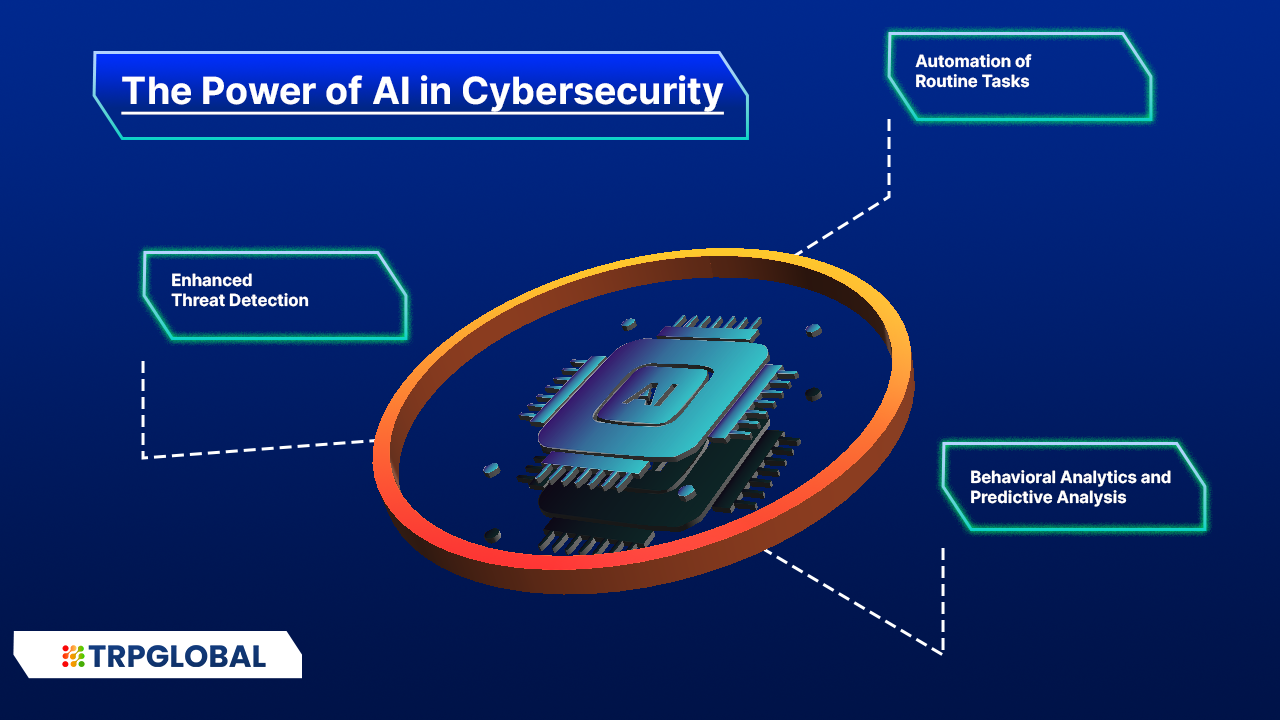
Routine cybersecurity tasks—such as log analysis, vulnerability scanning, and routine patch management—can be automated through AI, freeing up human experts to focus on more complex challenges.
Behavioral analytics involves monitoring user and network activity to identify deviations from normal behaviour that could signal an insider threat or an external attack. By applying machine learning techniques, organizations can predict future attacks based on historical data and current trends.
Despite its many benefits, AI-driven automation is not a panacea. Cybersecurity is a complex field that requires nuanced decision-making, contextual understanding, and ethical considerations—areas where human expertise remains indispensable.
Even the most advanced AI systems can struggle with the subtleties of cybersecurity that require human judgment:
The future of cybersecurity lies in striking the right balance between automated efficiency and human intuition. Here’s how organizations can implement a hybrid approach:
As technology evolves, so too does the landscape of cybersecurity. New technologies and methodologies are emerging that further blur the lines between automation and human oversight.
Quantum computing promises to revolutionize many fields, including cybersecurity. With its unprecedented processing power, quantum computing could potentially break current encryption methods, posing new risks. However, it also offers the possibility of creating quantum-resistant encryption algorithms. Integrating AI with quantum computing can help in developing proactive defense mechanisms that anticipate and neutralize quantum-era threats.
The zero trust model operates on the principle of “never trust, always verify.” AI can enhance this model by continuously analyzing user behavior and network traffic to validate every access request, regardless of its origin. By combining AI with zero trust principles, organizations can build more resilient defenses that dynamically adapt to new threats.
As AI takes on a more prominent role in cybersecurity, ensuring that these systems operate ethically and without bias is critical. Ethical AI frameworks help in making decisions that are transparent, fair, and aligned with legal standards. Incorporating ethics into AI design not only builds trust but also minimizes the risk of unintended consequences in automated decision-making.
For IT professionals tasked with protecting digital assets, understanding the nuances of AI and its integration into cybersecurity operations is crucial. Here are some best practices to consider:
The debate over whether cybersecurity can be fully automated is both complex and nuanced. While AI has undeniably transformed the field of cyber defense—with its capabilities in rapid threat detection, automated response, and predictive analytics—full automation remains an elusive goal. The dynamic and multifaceted nature of cyber threats means that human oversight is not just beneficial; it is essential.
The future of cybersecurity lies in collaboration—between man and machine, strategy and execution, innovation and oversight. Elevate your cyber defense strategy—contact us today to integrate AI innovation with expert human oversight!

In our newsletter, explore an array of projects that exemplify our commitment to excellence, innovation, and successful collaborations across industries.