


In the world of cybersecurity, there’s an uncomfortable truth most organizations avoid confronting: every shortcut, every ignored patch, and every “temporary” fix piles up into a mountain of hidden risk. This accumulation of unresolved vulnerabilities and outdated security practices is known as security debt and like financial debt, it compounds over time.
Enterprises often push issues to the back burner in favor of speed, uptime, or cost savings. But eventually, attackers exploit these cracks, turning yesterday’s compromise into tomorrow’s headline-making breach. The hard reality? Security debt isn’t just an inconvenience, it's a ticking time bomb.
In this blog, we’ll explore what security debt really means, why organizations keep falling into the trap of quick fixes, and how IT and cybersecurity leaders can take proactive steps to prevent “technical debt” from becoming a full-blown breach.
Security debt is the accumulation of risks, vulnerabilities, and insecure practices that build up when organizations prioritize speed, convenience, or business objectives over security best practices.
Think of it like credit card debt. Each quick fix or overlooked control is a “swipe.” You may get away with it for a while, but the interest piles up. Eventually, the bill comes due in the form of data breaches, ransomware, regulatory fines, and reputation damage.
Examples of security debt include:
Security professionals know the right thing to do. So why do enterprises keep making the same mistakes? The reasons are systemic and human:
When a product launch or customer deadline is on the line, security often gets sidelined. Leaders accept risk “for now,” assuming they’ll fix it later. Too often, “later” never comes.
Many organizations don’t even know the full extent of their vulnerabilities. Shadow IT, cloud sprawl, and poor asset inventory management create blind spots that attackers happily exploit.
Budgets, headcount, and time are finite. Security teams are constantly understaffed compared to the scale of risks they face, forcing them to triage instead of remediate everything.
Legacy systems running critical functions are often left untouched because updating them is costly, disruptive, or politically unpopular. Unfortunately, hackers see legacy as low-hanging fruit.
Security debt isn’t just theoretical, it has very real financial and reputational consequences.
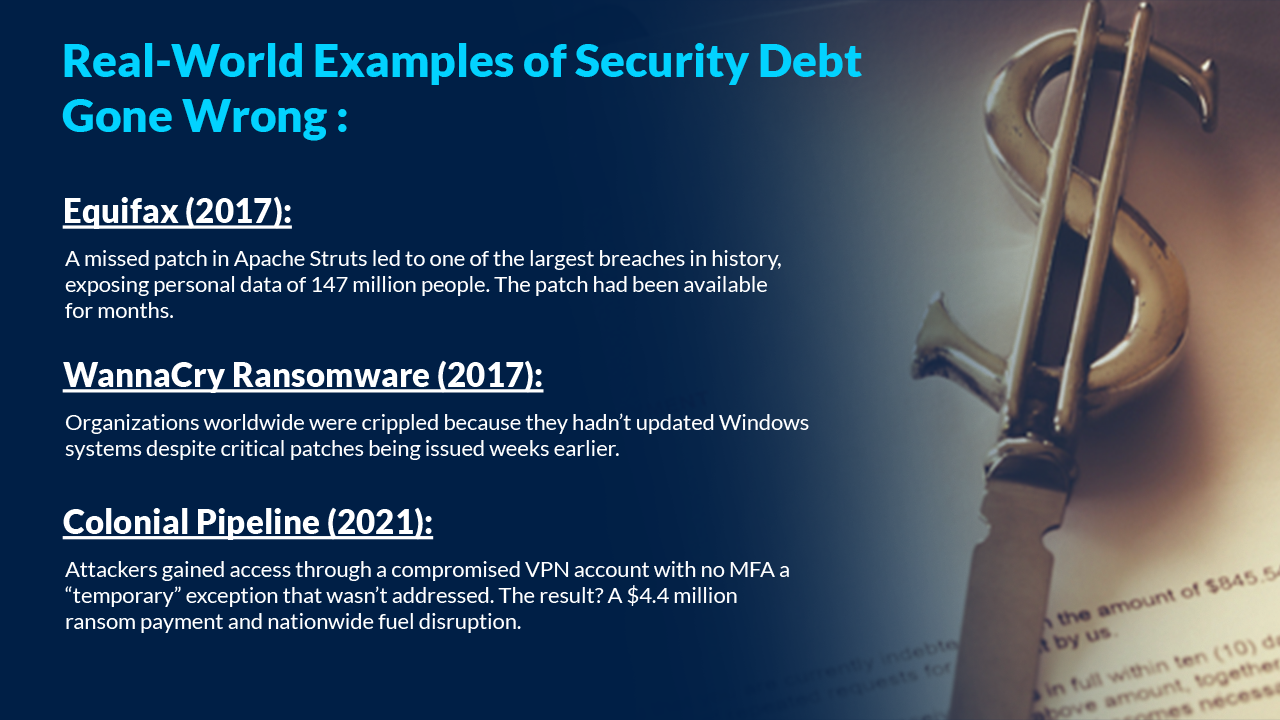
These aren’t just accidents, they're the predictable outcome of accumulating security debt.
If you want to get ahead of risk, you need to know where your weak spots are. Here are common signs your organization is drowning in security debt:
If two or more of these sound familiar, you’re likely carrying significant security debt.
Eliminating all security debt isn’t realistic but managing it proactively is. Here’s how:
Build security into development pipelines early, not after deployment. Automated code scanning, threat modeling, and secure-by-design principles help reduce future debt.
Automate patch management where possible. Prioritize critical vulnerabilities and ensure compliance deadlines are met.
Implement automated tools that expire elevated privileges. No more “I’ll remove it later” excuses.
Just like financial debt, track and measure your known security risks. Assign owners, deadlines, and risk scores so nothing is forgotten.
Adopt tools like EDR, SIEM, and CSPM to detect vulnerabilities before attackers do. Security debt thrives in environments without visibility.
Executives prioritize what they understand. Translate risks into business language downtime hours, compliance fines, revenue impact to secure buy-in for remediation.
Are you confident your organization isn’t carrying dangerous levels of security debt? The truth is, most aren’t. Don’t wait for attackers to expose your blind spots.
Schedule a security assessment today and uncover the risks hiding in your infrastructure before they become tomorrow’s headline.

In our newsletter, explore an array of projects that exemplify our commitment to excellence, innovation, and successful collaborations across industries.