


It’s no secret that artificial intelligence is reshaping industries across the globe. But while businesses race to innovate with AI, cybercriminals are exploiting it just as fast—especially on social media.
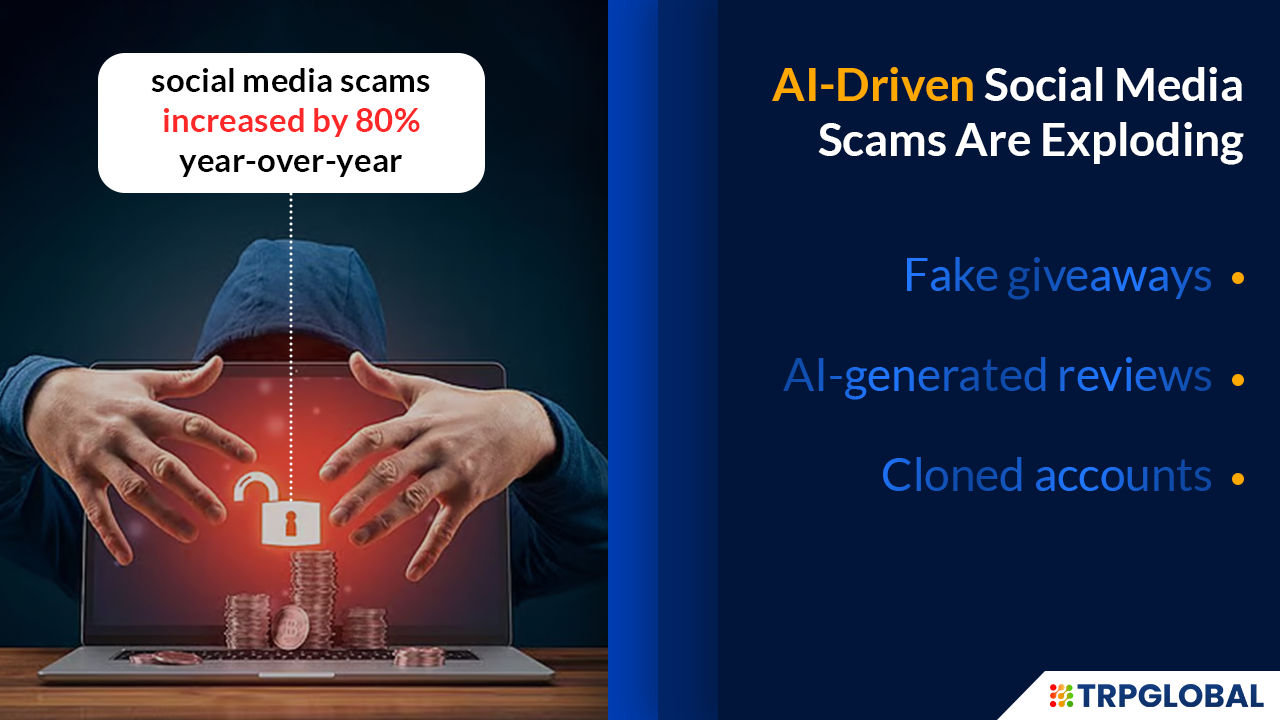
Fake giveaways, AI-generated reviews, cloned accounts—it’s not just annoying anymore. It’s an escalating risk to brand integrity and customer trust.
The scary part? These scams look shockingly real.
And many brands are only noticing the damage when it’s already viral.
Several factors have led to this rapid explosion of fraud across platforms like Instagram, Facebook, LinkedIn, and TikTok:
According to a 2024 survey by the Anti-Phishing Working Group (APWG), social media scams increased by 80% year-over-year, with AI-generated fraud content accounting for nearly 40% of detected scam activity.
Here’s a quick breakdown of how modern AI-driven scams operate:
Scammers create fake accounts using a company’s name, logo, and branding to appear legitimate.
AI helps generate posts, captions, and even DMs that sound authentic and engaging.
They offer irresistible incentives—“Win a free iPhone!”, “Get a year of service free!”—to lure customers into providing personal information or payment details.
Using AI, they flood posts with fake likes, comments, and testimonials, making the scam seem widely endorsed.
Once a user clicks the bait, they’re either:
Meanwhile, the real brand gets blamed for the fallout.
Just this year, several global telecom giants saw a surge in AI-powered giveaway scams. Fraudsters launched fake “anniversary promotions” offering free smartphones or service credits.
Beyond immediate financial fraud, AI-driven social media scams come with long-term hidden costs:
You can’t stop scammers from trying—but you can make it a lot harder for them to succeed. Here's how:
Set up automated monitoring tools to detect fake accounts, posts, and domain squatting related to your brand.
Platforms like BrandShield and ZeroFox specialize in digital risk protection.
Make it easy for customers to verify official promotions:
Don’t wait for scams to gain traction.
Have a standing incident response plan specific to social media fraud.
When scams pop up:
Let’s be real: AI itself isn’t malicious. It’s a tool—one that businesses and fraudsters alike are learning to wield. What’s different now is how accessible and powerful these tools have become. Scammers no longer need sophisticated hacking skills or big budgets. With a few clicks, they can generate convincing fake posts, create cloned voices and faces, and flood social feeds with counterfeit credibility. In this new era, it’s not enough to have strong marketing—you need strong defenses that evolve just as fast.
The fight against AI-driven scams isn’t just technical—it’s about protecting relationships.
Every fake giveaway, every cloned page, every AI-generated testimonial chips away at trust you’ve spent years building. And today, trust is your most valuable currency.
The companies that survive—and thrive—will be the ones who treat digital trust like the strategic asset it is: something to defend, nurture, and actively monitor every single day.
If you're ready to protect your brand, your customers, and your reputation from the new wave of AI-powered scams, we're here to help. Contact us to build a real-time monitoring, response, and brand protection strategy that actually works.

In our newsletter, explore an array of projects that exemplify our commitment to excellence, innovation, and successful collaborations across industries.